Summary
Although this recipe may look complicated and difficult it is not. There is a lot of down time and the effort you make it worth it for a show stopping dinner.
What's on Your Plate
Turkey Wellington swaps pricey beef tenderloin for turkey breast from a whole bird. The breast gets dry brined, injected with butter and white wine, and cooked in a 140°F water bath, then brushed with Dijon and wrapped in Black Forest ham, sherry mushroom duxelles, and puff pastry. A 400°F oven browns the lattice crust and brings the turkey to a juicy 165°F. You get holiday elegance on a weeknight budget. Although the recipe may look difficult, in reality, it's not if you have the right tools for the job.
Beef Wellington belongs on a holiday table, but a whole beef tenderloin can cost more than the rest of the meal combined. Turkey Wellington keeps everything that makes the classic special: the earthy mushroom layer, the savory wrap of ham, and the flaky golden crust. The only change sits at the center. A turkey breast costs a fraction of the price and feeds a small gathering beautifully. As a result, you set down a showstopper that slices into neat rounds without a carving lesson. If you love meat in pastry, Genius Chicken Wellington offers three more ways to play.
From Beef to Turkey: A Short History of Wellington
Food historians still argue about how Beef Wellington got its name. The popular story ties it to the Duke of Wellington and his 1815 victory at Waterloo; however, no recipe from his lifetime proves the link. Meat baked in pastry is much older. French cooks served filet de boeuf en croûte long before the English name caught on, and the dish became a dinner party star in the mid twentieth century.
The mushroom layer has a clearer story. Duxelles, finely chopped mushrooms cooked down with shallots and butter, takes its name from the Marquis d'Uxelles. His cook, François Pierre de La Varenne, gets credit for the preparation in the 1600s. In a Wellington, duxelles seasons the meat and forms a barrier between the juicy center and the pastry. Extra duxelles also makes an outstanding base for Cream of Mushroom Soup with Sherry, and Mushroom Duxelles Stuffing Cupcakes put it to work on the side.
Why Turkey Wellington Works
Every Wellington faces the same problem. The pastry bakes at 400°F, and it will brown and then burn long before a raw center cooks through. Sous vide solves that problem. The turkey cooks fully and evenly in a 140°F water bath, so the oven only needs to crisp the pastry and carry the turkey the last 25 degrees. No searing required.
Better yet, the water bath does the hard work. Once the turkey is sealed, it goes straight into the water, even frozen. That time is completely hands off. Use it to cook the duxelles with a spoonful of Chopped Shallots in Oil, let them cool, and thaw the pastry. For another take on the same technique, try Sous Vide Turkey Breast Roulade.
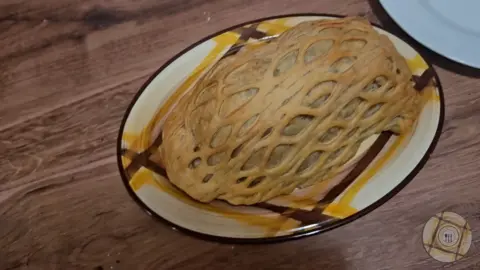
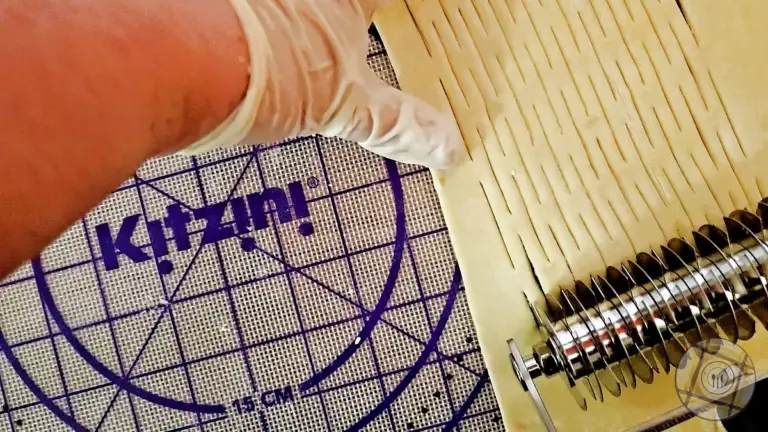
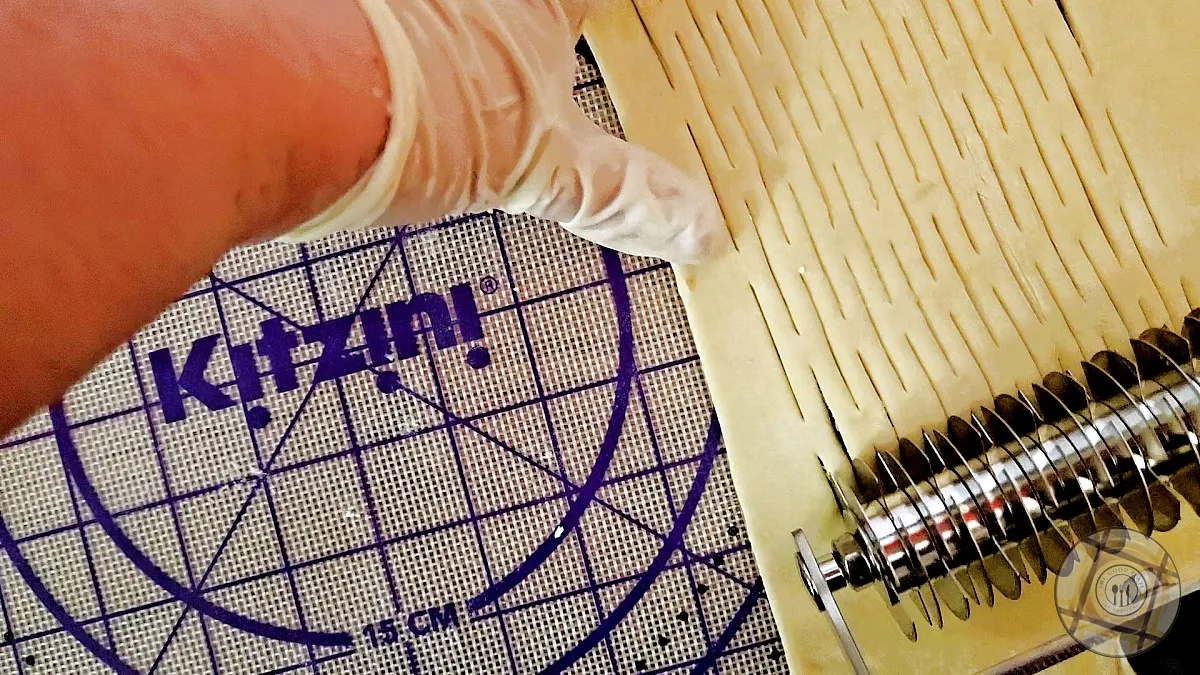
Finally, Black Forest ham stands in for prosciutto. It wraps the turkey just as neatly and costs far less. On top, a *pastry lattice cutter turns plain pastry into a net of diamonds. Press firmly as you roll; a light touch only marks the dough, while firm pressure cuts clean slits that open beautifully in the oven.
Start with a Whole Turkey
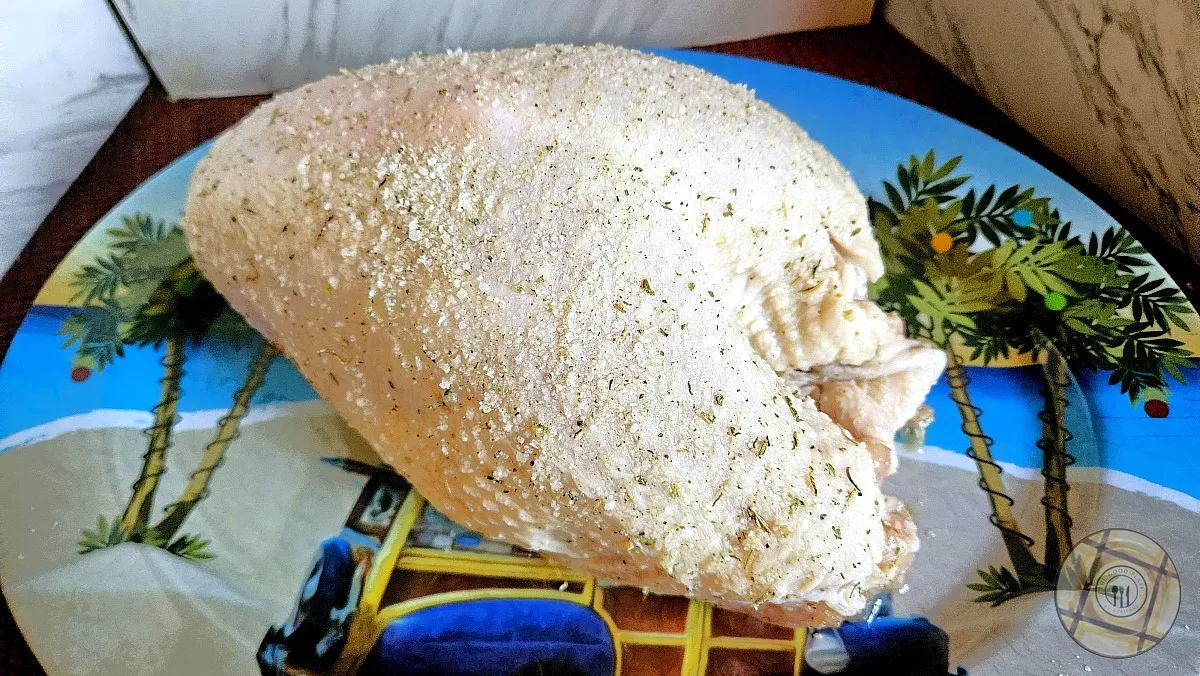
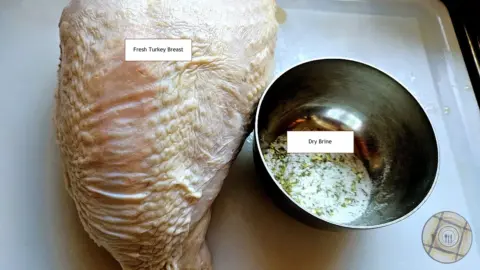
A whole turkey makes the best Turkey Wellington, and it stretches your holiday budget even further. Start with the breast still on the bone, skin and all, and dry brine it in the refrigerator for 24 hours. The skin protects the meat while the brine seasons it all the way through and helps it hold onto its juices.
The next day, pull off the skin, since skin turns rubbery under pastry, and remove the breast from the bone. Then comes the step that makes this version outstanding. Inject the breast with melted unsalted butter and dry white wine, seal it, and cook it at 140°F. The butter bastes the meat from the inside during the long, gentle bath, and the wine adds brightness. Let your thermometer tell you when the center is ready.
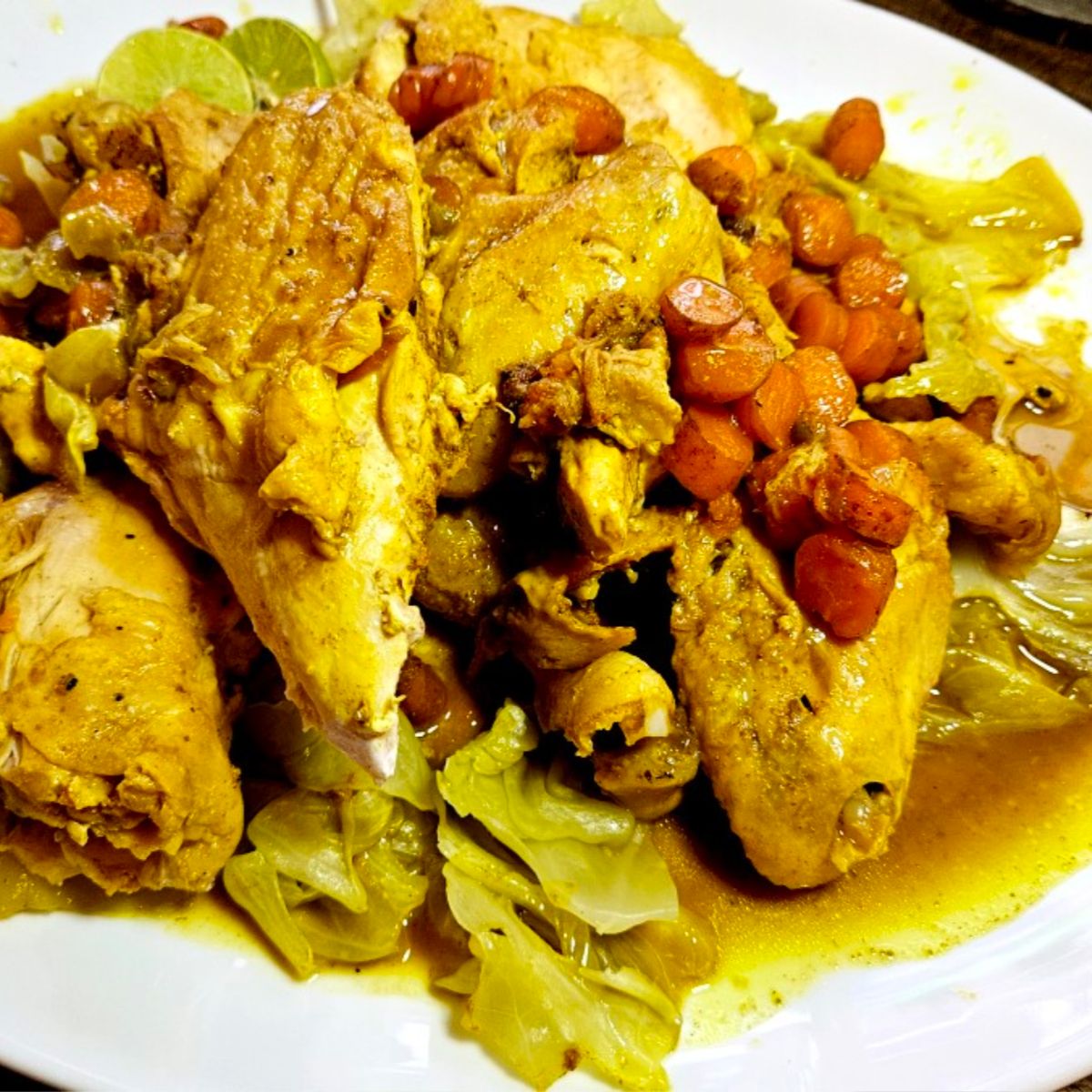
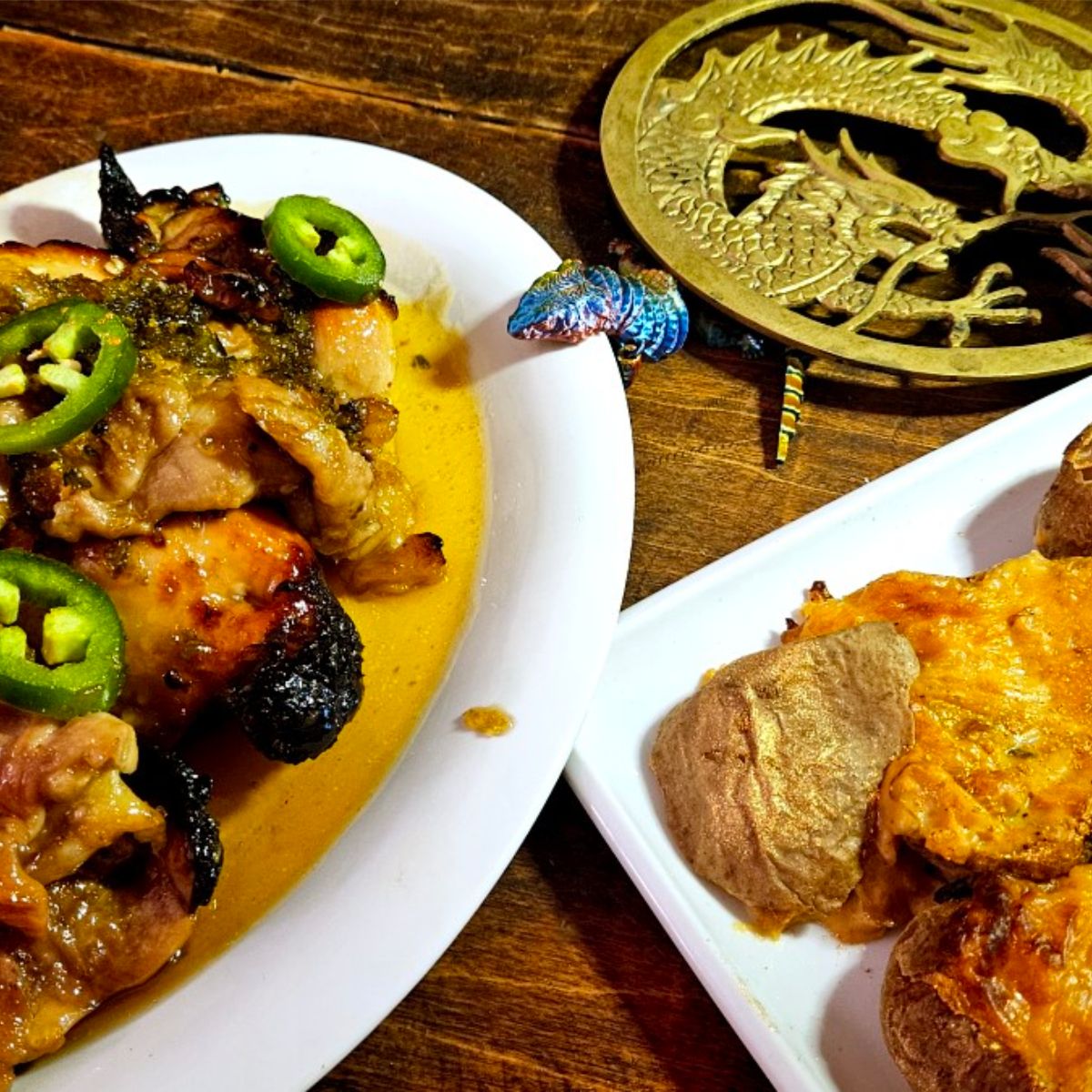
But the breast is only Part 1 of International Turkey Day, and the rest of the bird still has places to go. The legs pick up a glossy Chinese glaze. The thighs head to France with herbes de Provence. The wings come home to America with a Buffalo injection. Serve them all alongside the Wellington, and everyone at the table gets their favorite part of the bird. Part 2 lands November 6, but you can get a head start on International Turkey Parts right now.
Short on Time or Can't Find a Whole Turkey?
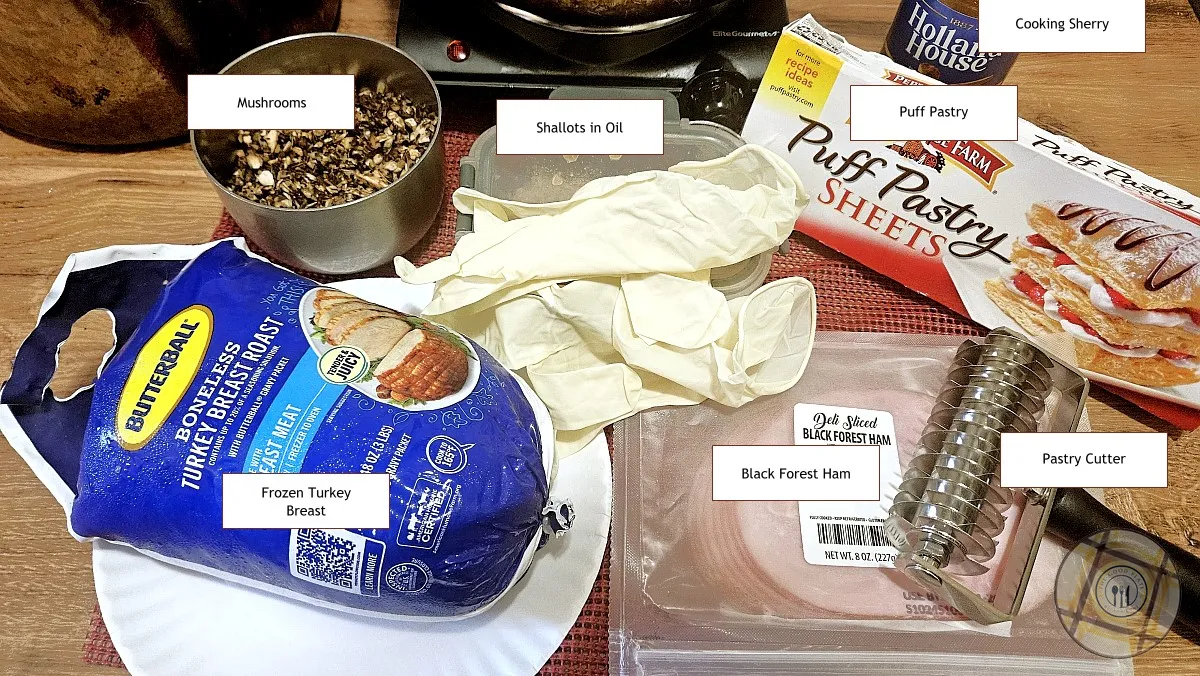
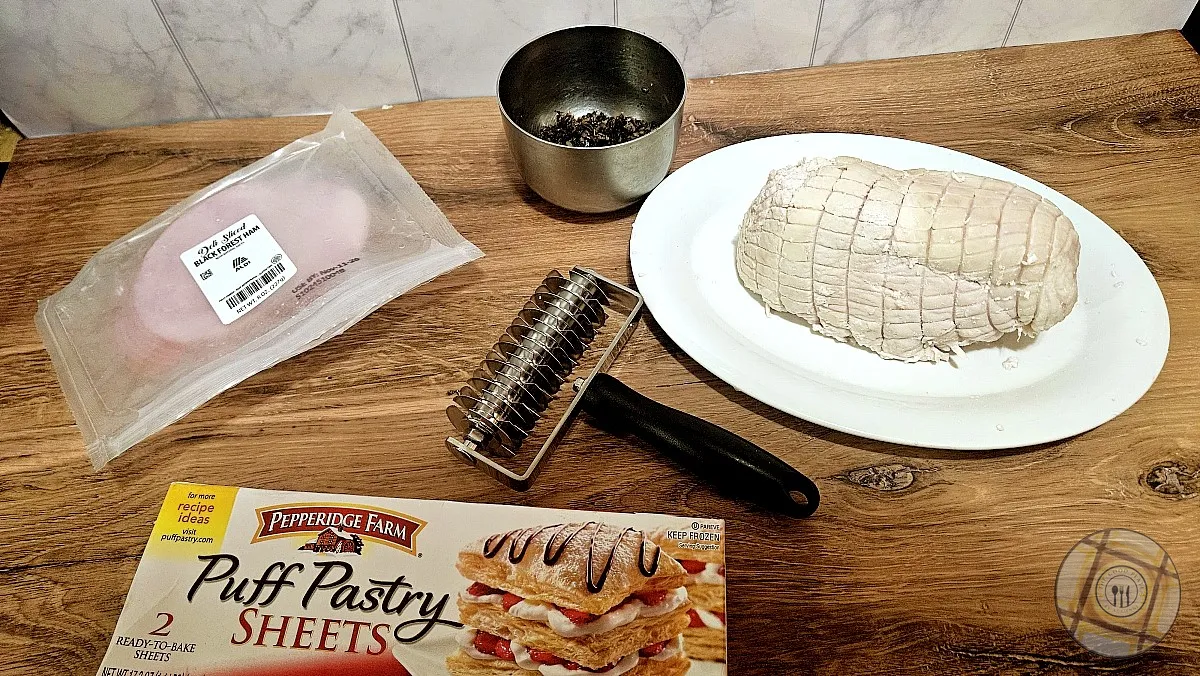
Before the holiday sales start, whole birds can be scarce or shockingly expensive. A frozen boneless breast roast, such as Butterball, is a fine stand-in, and it's the version you see in the video. It comes pre-seasoned with its own solution, so it skips the dry brine and the butter and wine injection. Leave it in its sealed bag and give it about 90 minutes at 140°F if thawed, or 2 hours from frozen. When you cut the bag open, discard the gravy packet and remove the netting.
Another brand of frozen breast, or a breast from the butcher, works just as well. It won't come with a gravy packet, and it probably isn't packed for a water bath, so seal it yourself. Use a vacuum sealer, or press the air out of a heavy zipper bag by lowering it slowly into the water. Once it's sealed, a frozen breast goes straight into the bath; simply add 30 minutes. Bigger or thicker roasts need longer, so let your thermometer decide.
Common Mistakes and Gotchas
Three small details make the difference between a soggy Wellington and a showstopper.
- Dry the turkey, and don't skip the Dijon. Pat the turkey dry the moment it comes out of the bag; any moisture left behind turns to steam and softens the bottom crust. Then brush it with Dijon mustard before you wrap it. The mustard adds a sharp bite that cuts through the rich duxelles and buttery pastry. The video version went without it, and you can taste the difference.
- Pull the roast at 140°F. It may look underdone, but the oven adds about 20 degrees and resting adds about 5 more, landing the turkey right at 165°F. Setting the bath to 150°F is tempting; however, those extra degrees carry all the way through and dry out the breast. Check the center with a thermometer before you wrap it. If it reads under 140°F, reseal it and give it more time.
- Cool the duxelles completely. Warm mushrooms melt the butter layers in puff pastry, and the crust bakes up limp instead of flaky.
Serving and Storage
Serving
Turkey Wellington deserves an entrance, so bring it to the table whole. Let it rest about 10 minutes, then slice it with a sharp carving knife into thick rounds so every piece shows the turkey, ham, and duxelles. Round out the plate with Wild Rice Pilaf, Brussels Sprouts with Roasted Garlic, and Easy Potatoes Anna for the NESCO Roaster Oven.
Storing
Wrap leftover slices tightly and refrigerate them for up to 3 days. Reheat them in a 350°F oven until warmed through; the oven brings back the crisp pastry, while a microwave turns it soggy. Skip the freezer, because puff pastry loses its flake once thawed. To get ahead, make the duxelles up to 2 days early and keep them covered in the refrigerator.
Extra turkey and Black Forest ham also make Liz's Grilled Special Sandwiches, a toasty lunch for the next day.
FAQ
Can I use prosciutto instead of ham?
Yes. Prosciutto is the traditional choice for Wellington, and it works the same way. Black Forest ham simply keeps the cost down while still wrapping the turkey neatly and adding savory flavor.
Do I need to sear the turkey before wrapping it?
No. The water bath cooks the turkey through, and the 400°F oven browns the pastry. Searing adds a step without improving the finished Wellington.
Can I sous vide the turkey from frozen?
Yes, as long as it is sealed. Put the frozen turkey straight into the water bath and add 30 minutes to the cooking time. Always confirm the center reads 140°F before wrapping.
Step by Step Photos
Turkey Wellington Recipe
Email Me the Recipe
Enter your email address and we will send it straight to your inbox.
Turkey Wellington
Equipment





If you purchase any of the products through these affiliate links, I get a few pennies that help keep The Good Plate open. I use these products myself and want you to be able to easily find them.

Ask the Cooking Genie
Have a question about this recipe that isn't answered in the post? The Cooking Genie is at your service. The Genie knows this recipe well, but even genies slip up now and then — please use your own good judgment in the kitchen. Per genie union rules, the Genie may grant three questions per visit. For anything beyond this recipe, please use the contact form.
Ingredients
~~ -- Dry Brine -- ~~
- 1 teaspoon (4.93 ml) Sugar
- 1/4 cup (73 g) Kosher Salt
- 1 tablespoon (14.79 ml) Herbes de Provence
~~ Turkey ~~
- 1 (1) turkey breast
- 1/4 cup (56.75 g) butter, melted
- 1/4 cup (59.15 ml) white wine
~~ Duxelles ~~
- 1/2 pound (226.8 g) mushrooms
- 1 (1) shallots in oil

- 1 tablespoon (14.79 ml) butter
- 1 tablespoon (14.79 ml) sherry
~~ -- Assembly -- ~~
- 2 tablespoons (29.57 ml) Dijon mustard
- 8 slices (8 slices) honey ham
- puff pastry, thawed
Instructions
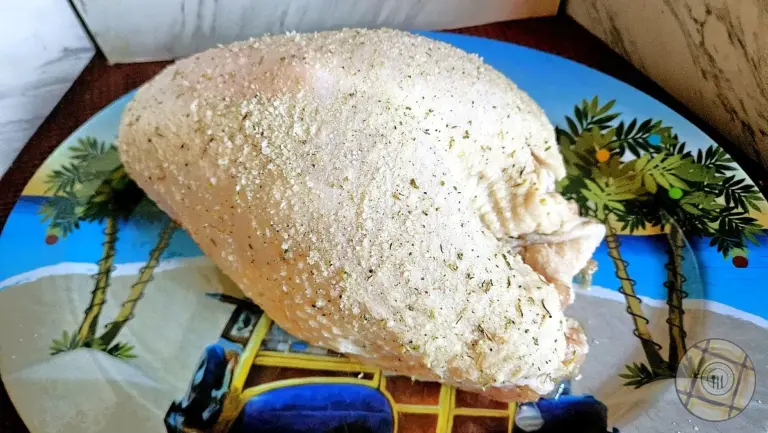
- Ingredients for Butterball Frozen Turkey Breast
Brine
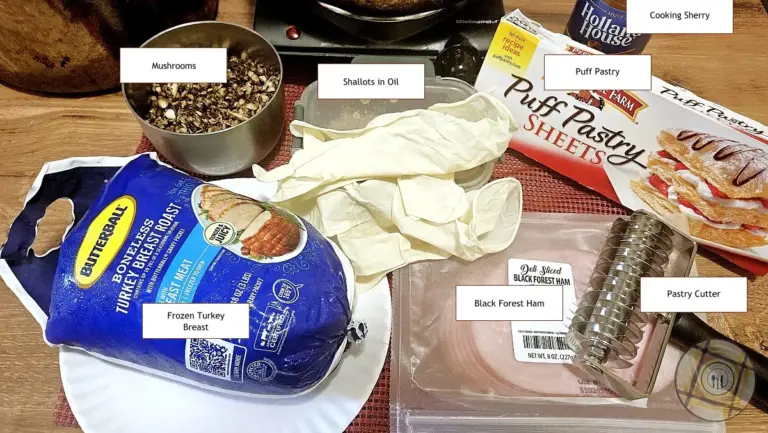
- 1 teaspoon (4.93 ml) Sugar, 1/4 cup (73 g) Kosher Salt, 1 tablespoon (14.79 ml) Herbes de Provence, 1 turkey breastCombine the ingredients for the brine in a bowl. Rub the skin, flesh and cavity with the brine and put the breast uncovered in the refrigerator for 24 hours.
- Put the puff pastry in the refrigerator if you have it in the freezer.
Turkey
- 1/4 cup (56.75 g) butter, 1/4 cup (59.15 ml) white wineCombine the wine and melted butter and set it aside.
- Remove the skin and bones from the breast. You may use the bones for broth.
- Inject the breast as much as possible with the injection liquid.
- Vacuum seal the turkey and put in in a sous vide bath. Set the sous vide immersion cooker to 140 for 90 minutes, If your breast is frozen, add an additional 30 minutes,
- When the turkey has finished cooking, remove it from the bag and use paper towels to thoroughly dry it.
Duxelles
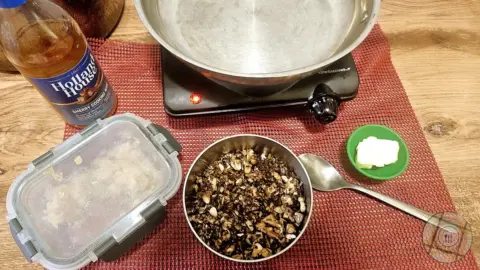
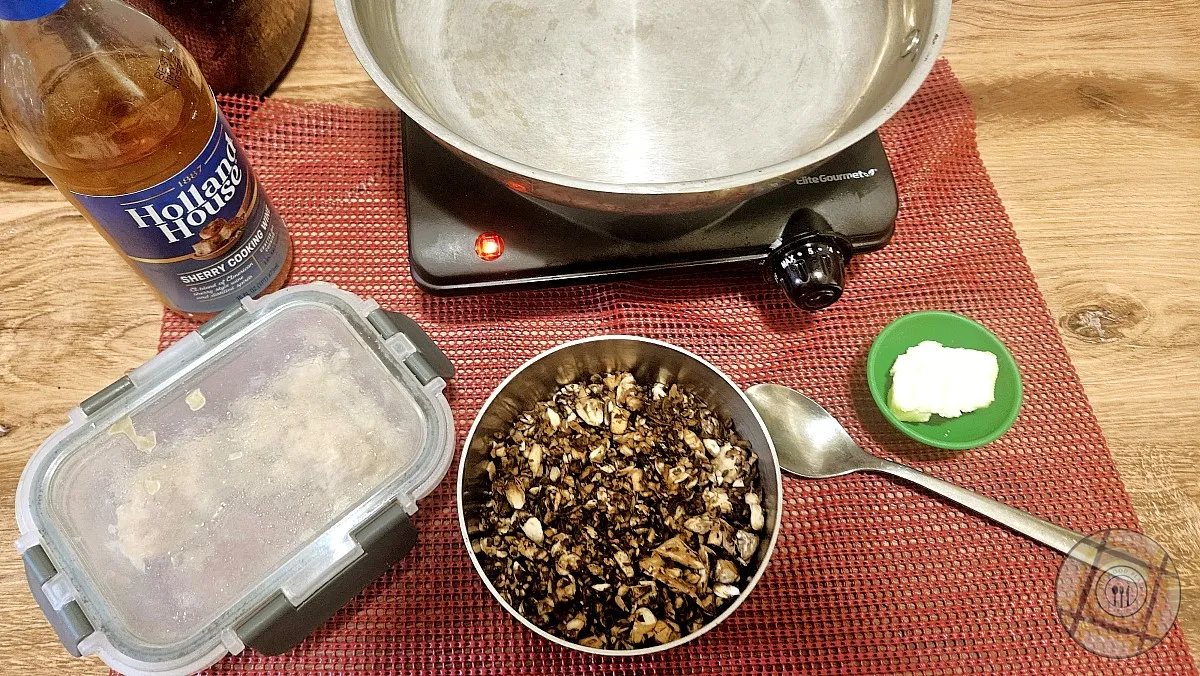
- 1/2 pound (226.8 g) mushroomsChop the mushrooms into very small pieces. A food processor does a great job with this.
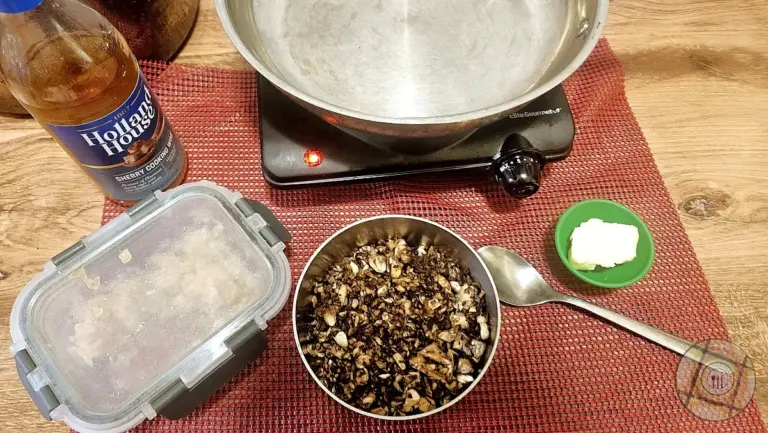
- 1 shallots in oil, 1 tablespoon (14.79 ml) butterMelt the butter in a saute pan and add the shallots in oil.
- Add the mushrooms and saute for about 2 minutes.
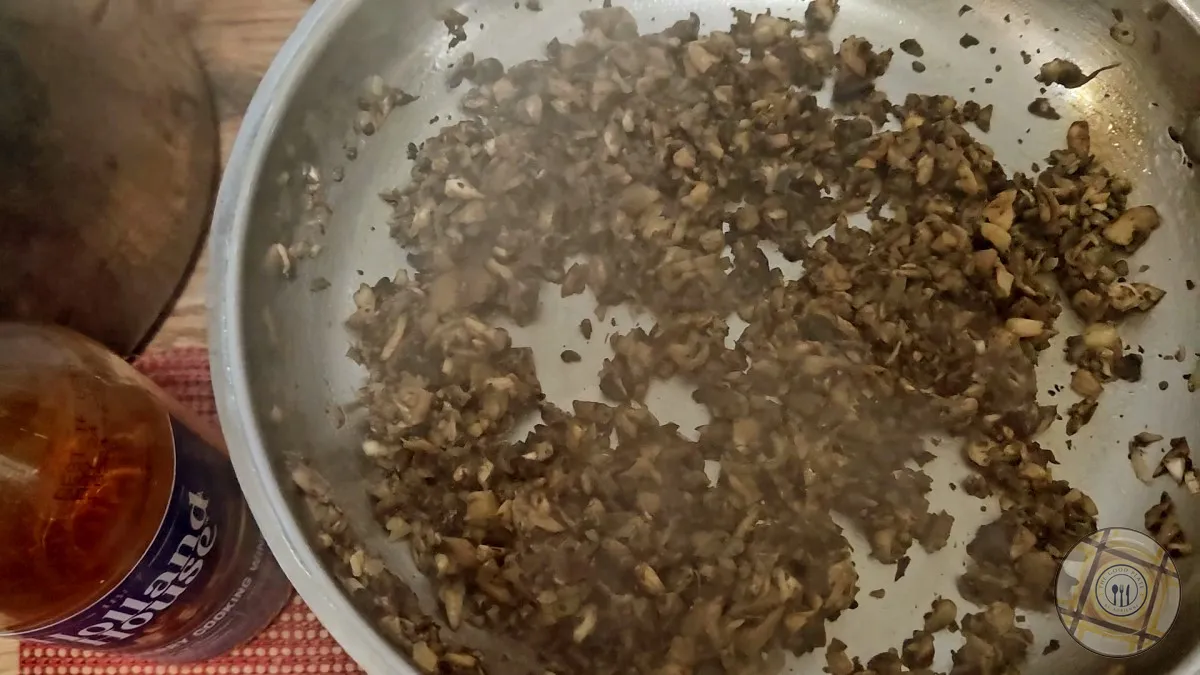
- 1 tablespoon (14.79 ml) sherryAdd the sherry and continue to saute until all the pieces of mushroom have browned and softened.
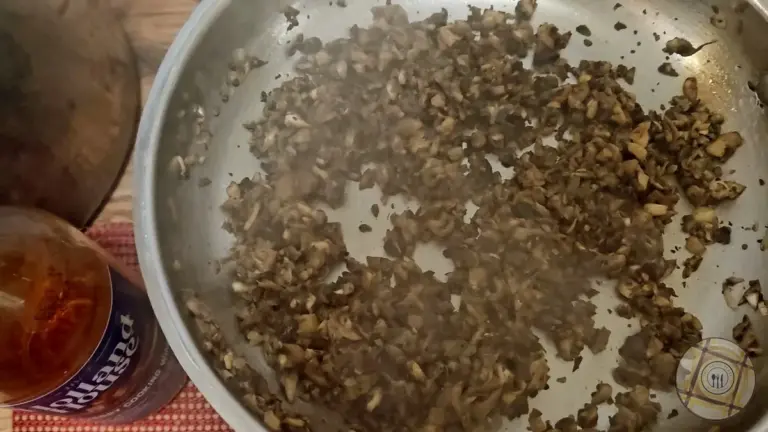
- Remove the duxelles from the pan and let cool.
Pastry
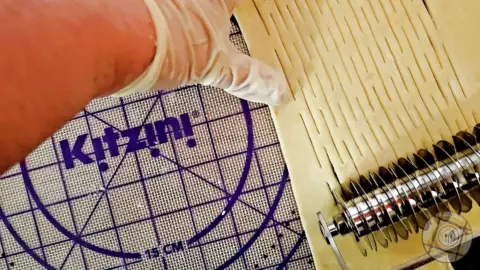
- puff pastryRemove the pastry from the refrigeratror. Separate the two pieces. Roll the first one out to smooth it. Use the pastry lattice cutter and press down hard to make the cuts. Set the pastry aside.
- Take the second piece and roll it out as well. It should be larger than your turkey breast.
Assembly
- Preheat the oven to 400 °F (204 °C).
- Line a sheet pan with parchment paper for easy clean up.
- Lay the uncut piece of dough on the parchment.
- 2 tablespoons (29.57 ml) Dijon mustardCenter the slightly cooled turkey on the uncut piece of dough. Brush the surface of the turkey with mustard.
- Put the duxelles on top of the mustard and spread them around. Be generous.
- 8 slices honey hamPut the ham on top of the duxelles.
- Bring the sides of the dough up and stretch it if necessary to cover the top of the breast.
- Pinch the sides and close them with your fingers.
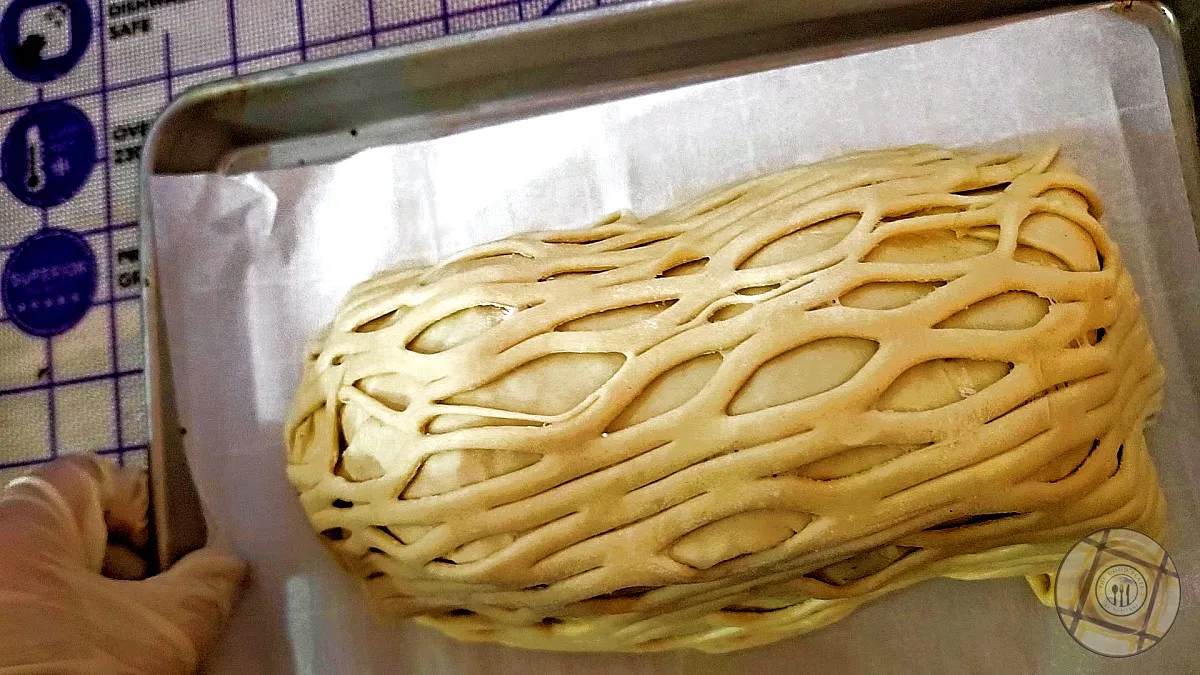
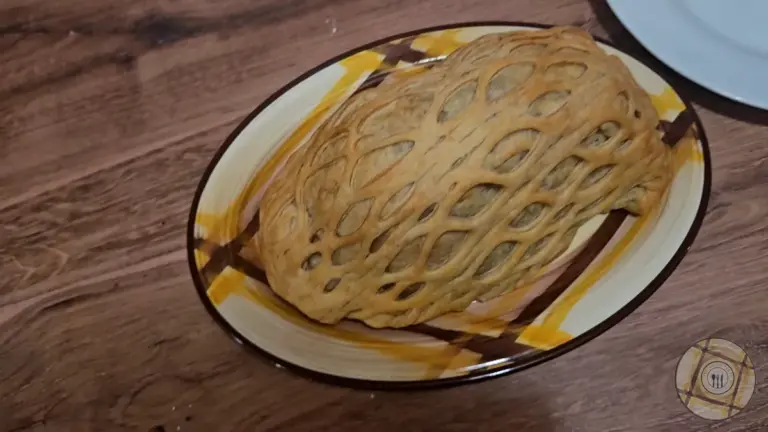
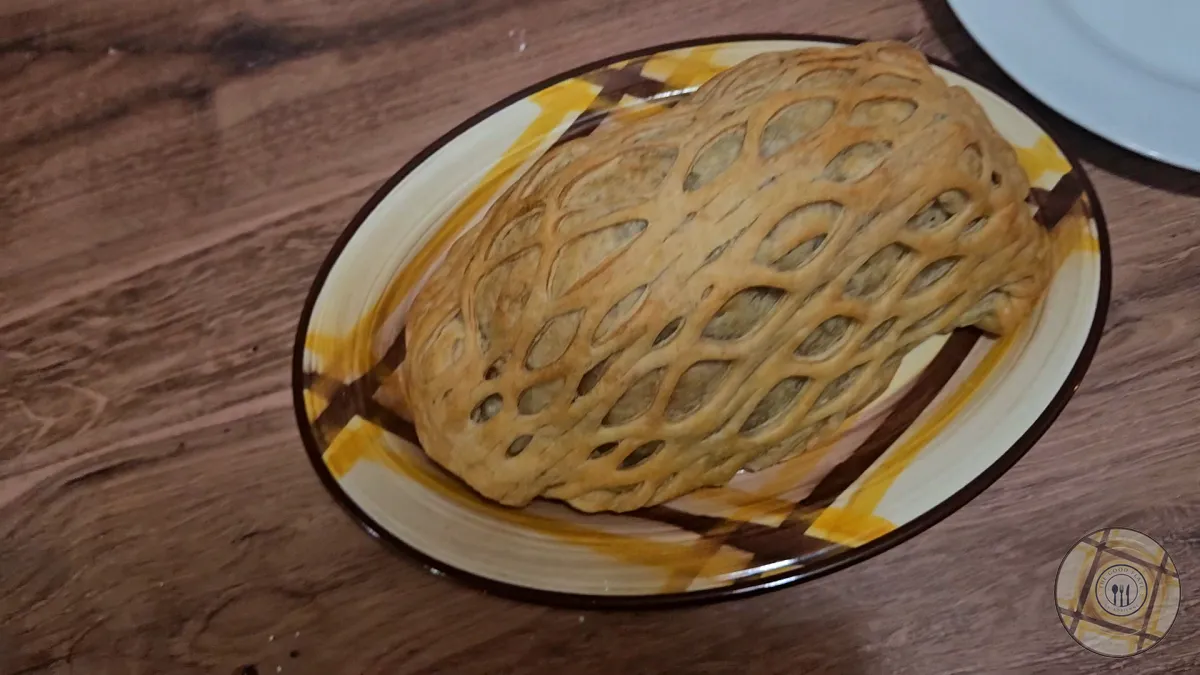
- Take the lattice and lay it over the dough, Tuck it in lattice dough under and around the bundle. You may use an egg wash on the dough if you want to.
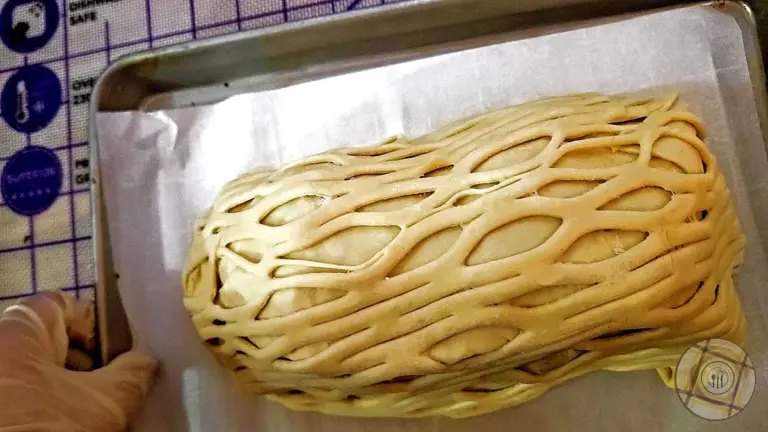
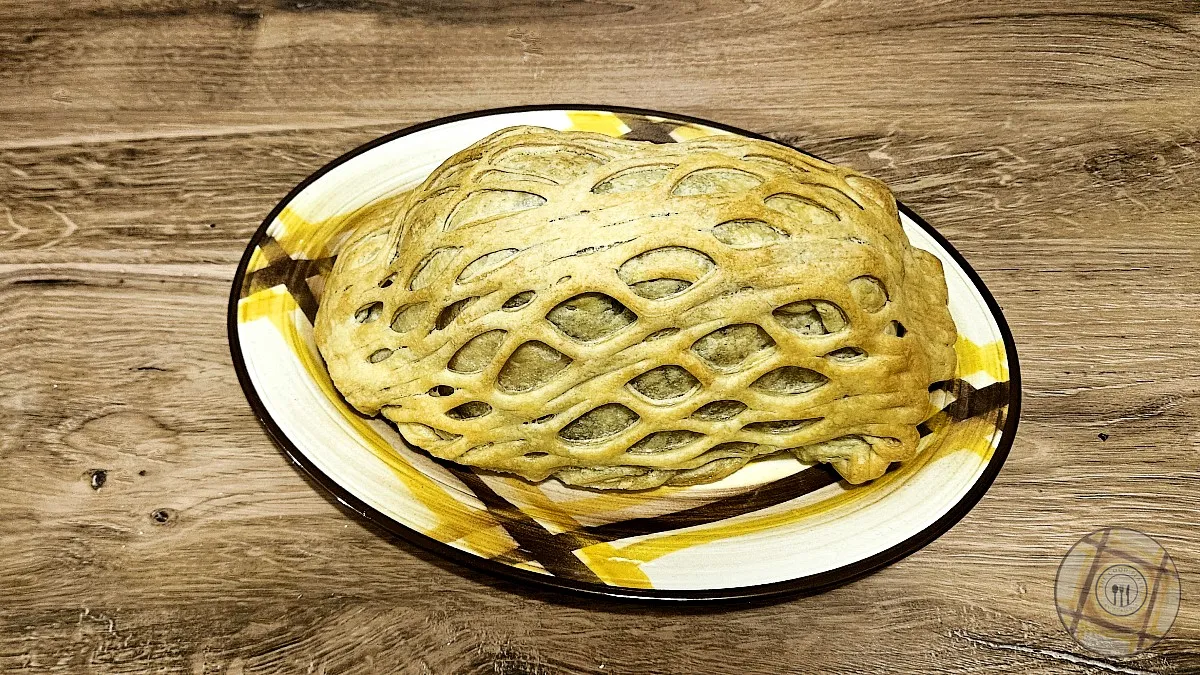
- Put the turkey Wellington in the oven and roast for about 15 minutes. Check the dough. Roast until the dough is golden.
- Remove the Wellington from the oven and let it rest for 10 minutes before slicing at the table.
Video
Nutrition
Transcript of Turkey Wellington
Transcript
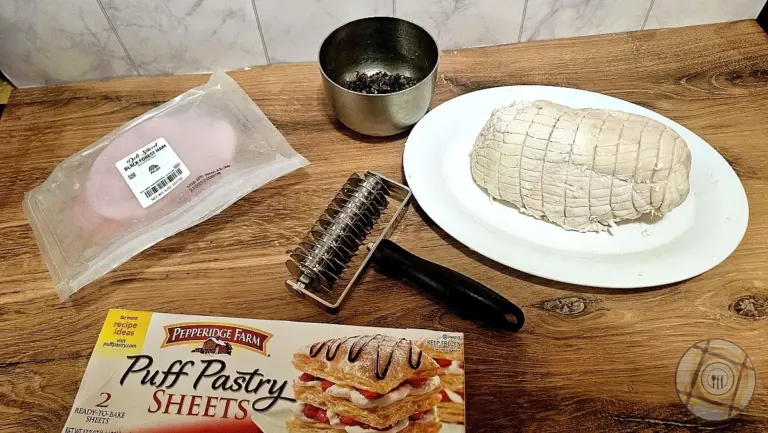
Good afternoon and welcome to The Good Plate's Kitchen. Today we are making Turkey Wellington. This is similar to Beef Wellington, except, well, you know, prices are high, so we're going to make it out of turkey. We're using a small turkey breast, and we have mushrooms already chopped up for duxelles, and puff pastry.
I'm going to show you some interesting instruments. This is a pastry cutter, so it can make a lattice, and we're going to be using that later. We're also going to be sous viding the turkey, because here is the problem with anything Wellington. Basically, the pastry is cooking at 400 degrees, and the pastry will cook or start to burn before the inside cooks. So we're going to help that. We're going to fully cook this turkey breast via sous vide, so it will be completely cooked when we put it in the pastry with the duxelles. Since this is already vacuum sealed, we don't have to vacuum seal it anymore. All we have to do is put it in. It's going to cook for about two hours.
Okay, we're making the mushrooms for the Wellington. We're cooking them with butter and shallots and oil. We probably won't use all of these mushrooms. We use some for the Wellington, and the rest will be used for mushroom soup. It makes the most amazing mushroom soup, and you can find a recipe for that mushroom soup on the website, as well as the recipe for the shallots and oil, which we keep in the refrigerator. You can hear it sizzling.
We're going to add sherry. Again, this is a cooking wine; this is not real sherry, and it does just fine for something like this. It smells amazing. I wish you were here. It's called duxelles. You just want to cook it until the mushrooms are all basically the same color and they have released some of their juice. Of course, it has to cool off before we wrap pastry around it. Otherwise, we'll melt the pastry, and that would not be fine. You can see they're releasing some of their juice. All right, these are done. We're going to turn these off and let them cool off, and then we'll be back.
Okay, so here's our first dough. I'm going to roll it a little bit. Be sure it is the right length. Okay, that's ready to go. I'm going to move this over here so I can score it first. I'm going to take this and cut into it hard, and you can see it's making pretty lines. You have to press hard.
Now the other piece. I'm going to roll this one out a little bit bigger, because this is what the turkey is going to be on. Of course, if you have your own puff pastry, you are more than welcome to use it, and more power to you. We have the turkey. I'm going to stick it right there. Now we put ham on here. Usually it's prosciutto, but we're just going to use ham. Of course, when you use sous vide, you have to be careful to dry off the food. Okay, so that is completely enclosed. Now I'm going to put the duxelles on there.
I'm going to bring this up, stretch, and seal. Seal it like that with your fingers. This is why we have the piece that goes over it, so that it looks nice when you present it at the table. I have a quarter sheet pan. I'm just going to line it with parchment paper for easy cleanup and transfer it on here. I'm going to take this and lay it over the top, open it up, and tuck it in. This is going to go into a 400 degree oven until the pastry is nicely browned. Because the turkey is completely cooked, we don't have to worry about having uncooked or raw turkey.
Okay, and here is our beautiful Turkey Wellington, out of the oven. We're going to cut it open. Let's cut from this side so you can see what it looks like. Listen to that crunch. And there we go, a big piece, so you can really see. Look at that. There's the mushroom duxelles, and the ham, and the turkey.
Thank you for watching. We'll see you next time on The Good Plate. And remember: Forever Forward, Forever Flavorful, YUM YUM!