What's on Your Plate
Red Wine and Fennel Crusted Pork Loin is crusted with ground Merlot wine flour, paprika, white pepper, chili flakes, and fennel seed into a fine rub. Score the pork loin, coat it, and chill it for an hour so the rub sets. Spin it on a vertical rotisserie until the center reaches 145°F, then rest, slice, and enjoy a dark, crackly crust around tender, juicy pork.
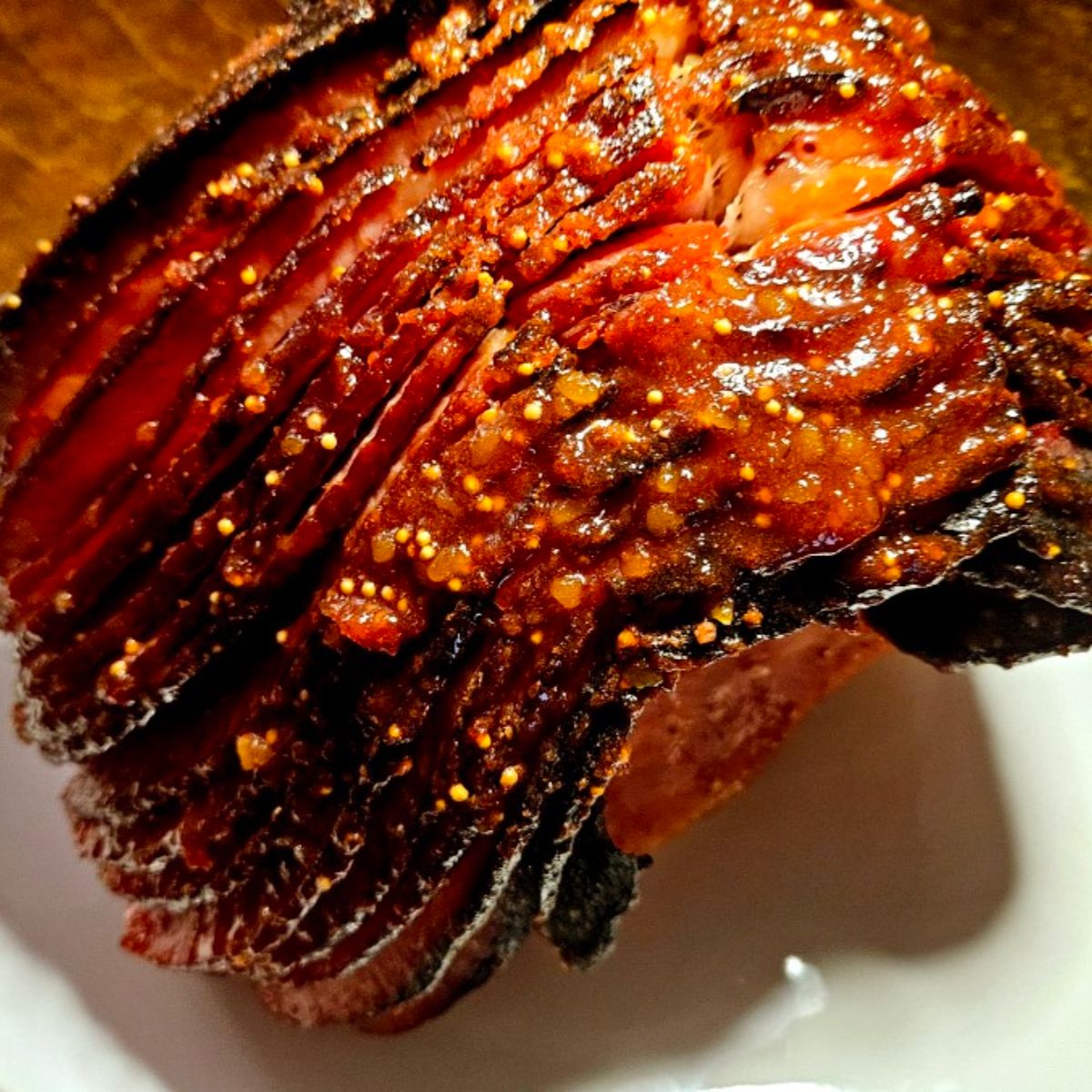
Red wine and pork belong together, but pouring wine over a roast washes the seasoning right off. Red Wine and Fennel Crusted Pork Loin solves that problem with wine flour, a powder made from dried grape skins and seeds. You get the deep, fruity flavor of red wine in a dry rub that clings to the meat and turns into a dark, crackly crust.
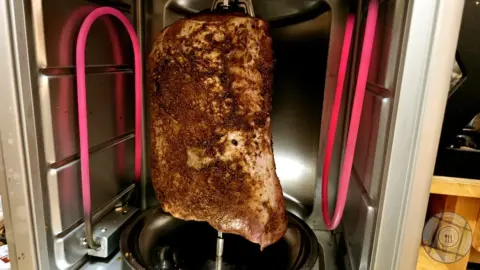
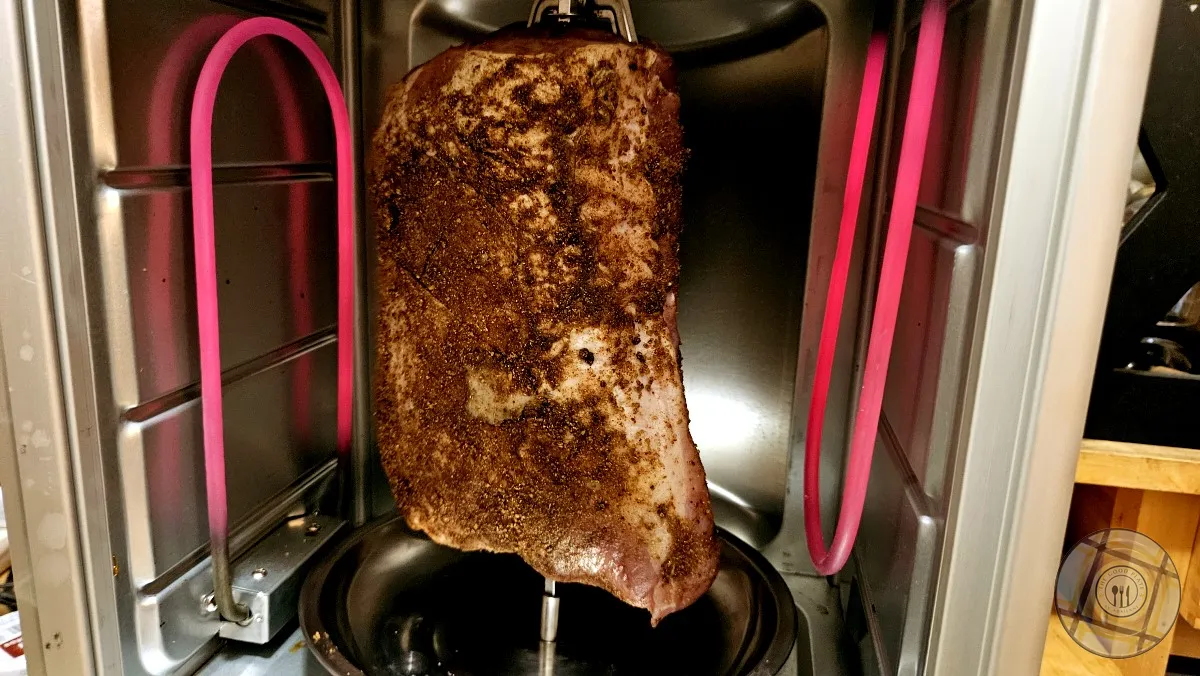
A vertical rotisserie does the rest of the work. As the loin spins, the fat drips away and the heat browns every side evenly. If you love a bold spice crust, you will also enjoy the Chile-Crusted Pork Roast Reverse-Seared and the Fennel Pork Roast for the Air Fryer.
What Is Wine Flour?
Wine flour comes from pomace, the skins and seeds left behind after winemakers press their grapes. For centuries, people have found uses for pomace instead of throwing it away. Ancient Romans soaked it in water to make a light drink for farm workers, and Italians still distill it into grappa. Grinding dried pomace into flour is a modern twist on that same no-waste tradition.
The flour in this recipe is made from Merlot skins and seeds grown in the Finger Lakes wine region of New York. It contains no alcohol, and it is naturally gluten free. Treat it as a seasoning rather than a baking flour; it adds color, a gentle tartness, and the tannic depth you taste in a glass of red.
Fennel has an even longer history with pork. Italian cooks season porchetta with fennel, and Tuscan butchers flavor finocchiona salami with the seeds. The sweet, anise-like flavor cuts through the richness of the meat, which explains why the pairing has lasted for generations.
Why Red Wine and Fennel Crusted Pork Loin Works
First, grind the whole rub together. A dedicated spice grinder turns the fennel seed, chili flakes, paprika, white pepper, and wine flour into one even powder. Every bite tastes balanced, and no whole seeds fall off the roast.
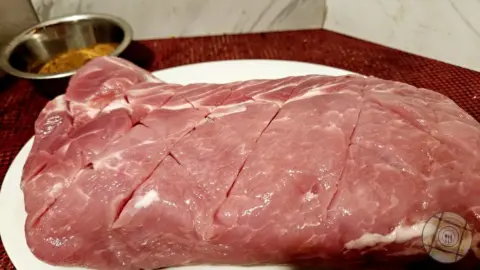
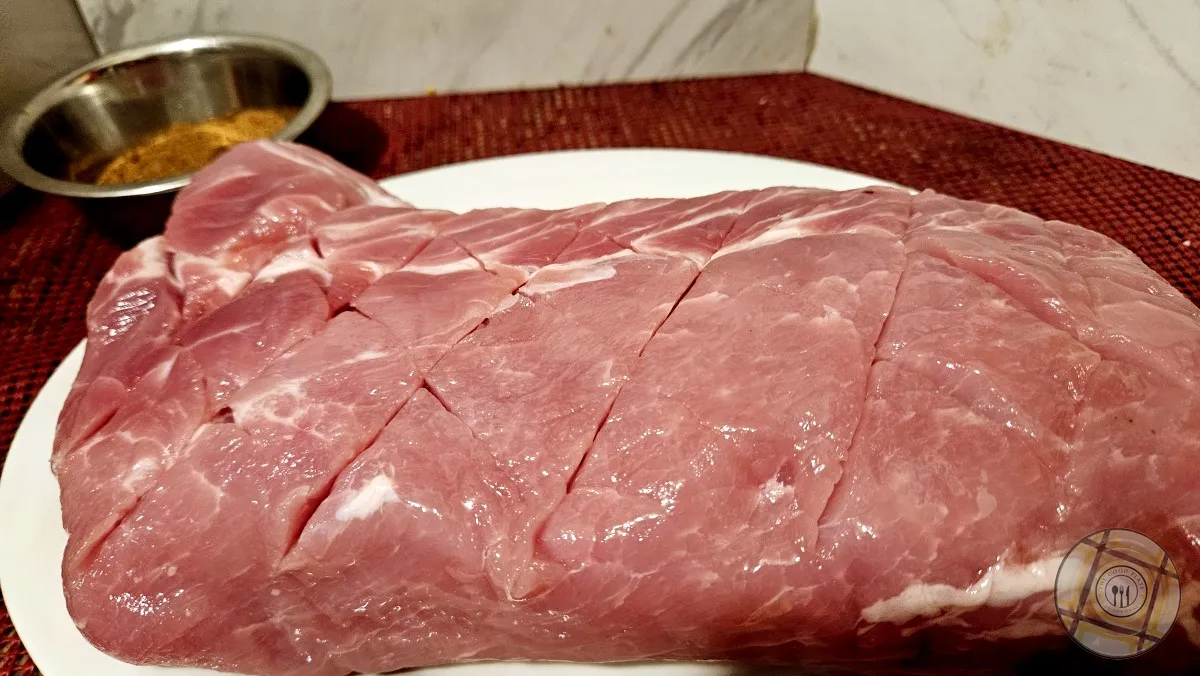
Next, score both sides of the loin. Those shallow cuts open small channels that pull the seasoning deeper into the meat. Trimming most of the fat cap helps too. On a vertical rotisserie, the fat simply drips away, so a thick cap only blocks the rub from reaching the meat.
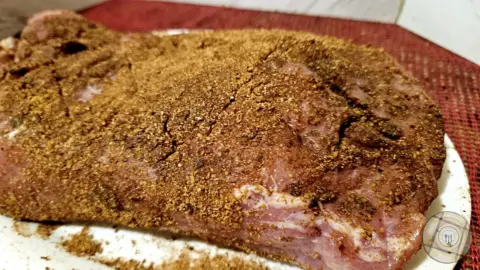
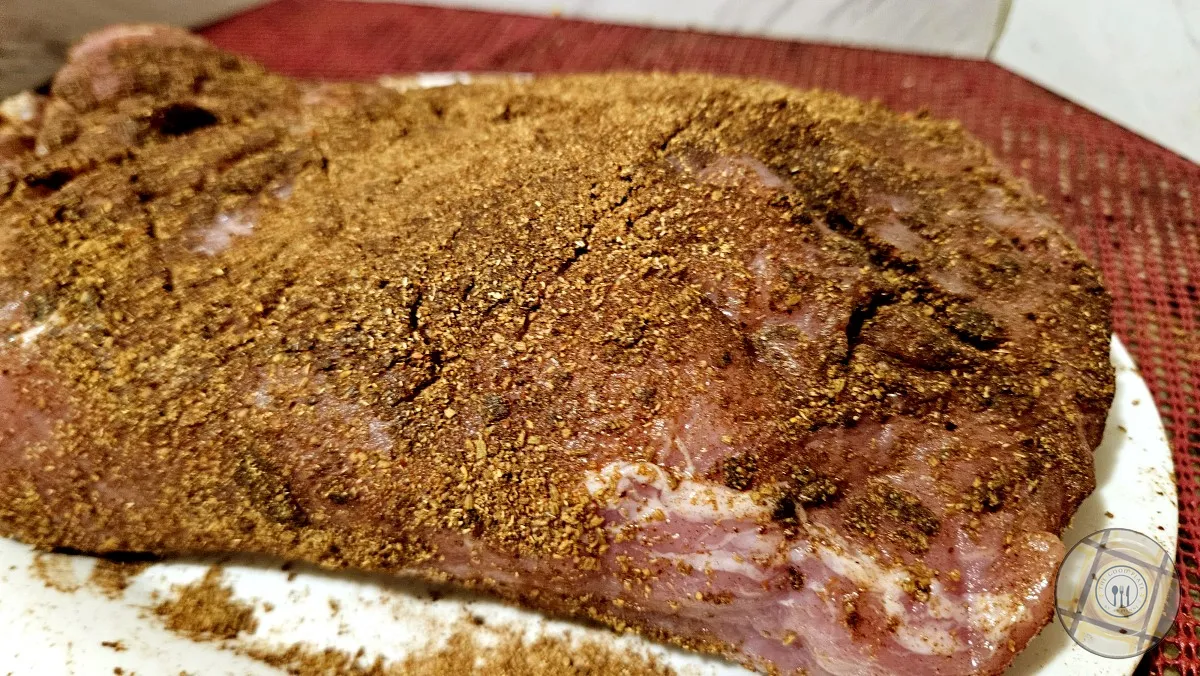
Finally, give the coated roast an hour in the refrigerator. During that rest, the rub draws a little moisture from the surface and forms a paste that grips the pork. When the roast starts spinning, the crust stays put instead of flying off. If you enjoy hands-off pork, try the Hoisin Pork Roast Sous Vide next.
Common Mistakes and Gotchas
A few small details separate a great crust from a patchy one. Watch for these as you cook.
- Skipping the rest. Without the hour in the refrigerator, the spinning motion knocks the rub loose.
- Using whole spices. Whole fennel seeds roll right off the meat. Grind everything into a fine powder first.
- Judging doneness by color. Wine flour darkens the crust quickly, so the outside looks finished before the center is ready. Use an instant-read thermometer and pull the pork at 145°F, the USDA safe minimum for whole cuts of pork.
- Sharing a grinder with your coffee. Keep one grinder just for spices so your morning cup never tastes like fennel.
Serving and Storage
Serving
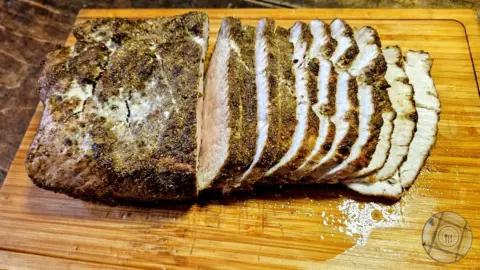
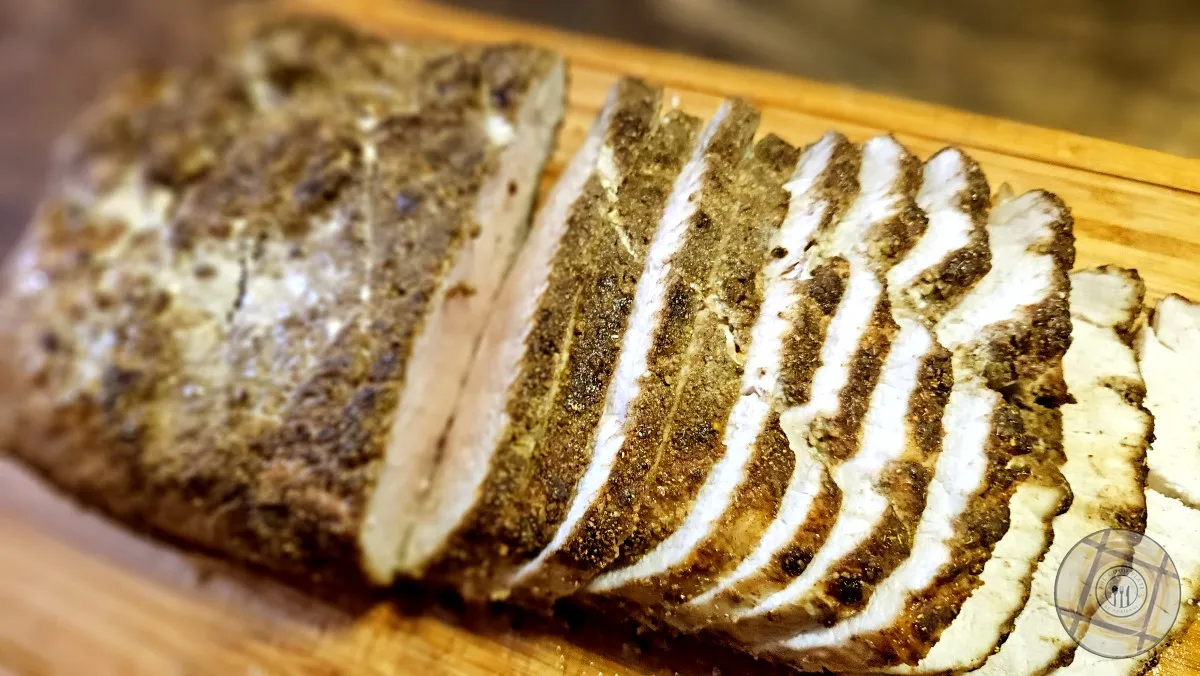
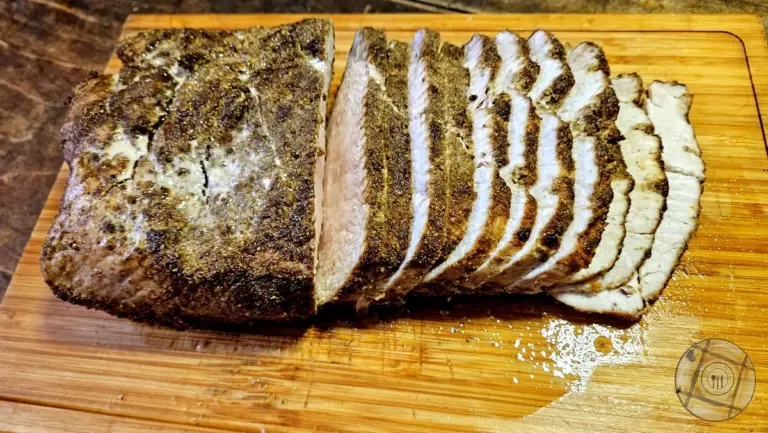
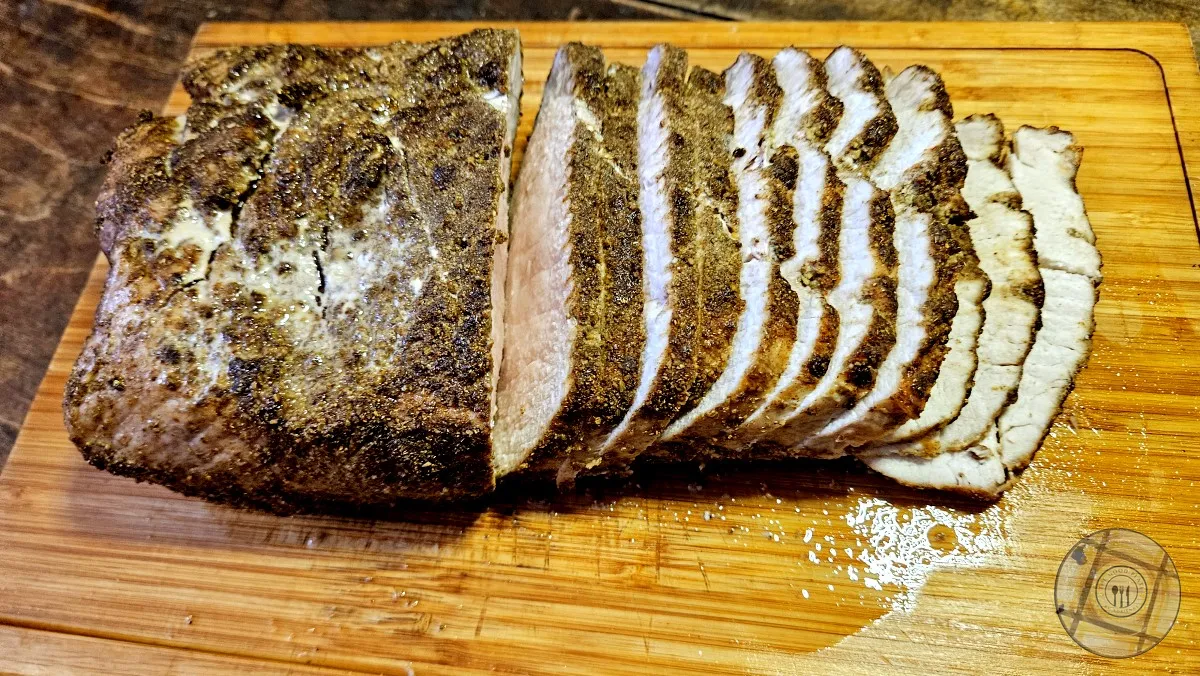
Let the roast rest before slicing so the juices settle back into the meat. Then slice it thin across the grain to show off the ring of dark crust around each pale, juicy slice. Serve it with roasted potatoes or Brussels Sprouts with Roasted Garlic. Leftover slices also make an outstanding sandwich on crusty bread with a smear of mustard.
Storing
Store leftover pork in an airtight container in the refrigerator for 3 to 4 days, following the USDA leftovers guidelines. For longer storage, wrap the slices tightly and freeze them for 2 to 3 months. Reheat them gently in a covered pan with a splash of broth so the meat stays moist and the crust keeps its flavor.
FAQ
Does wine flour contain alcohol?
No. Wine flour is made from dried grape skins and seeds, so it contains no alcohol. It gives you the flavor and color of red wine without the liquid.
Can I make this without a vertical rotisserie?
Yes. Roast the coated loin on a rack set over a sheet pan in the oven until the center reaches 145°F. The crust will be a little softer because the meat sits still, but the flavor stays the same.
How long should the rub sit before cooking?
Give it about one hour in the refrigerator. That rest lets the rub form a paste that holds tight while the roast spins.
Why should I score the pork loin?
Scoring both sides opens shallow channels that carry the seasoning deeper into the meat. It also gives the rub more surface to grip.
Can I skip the wine flour?
You can. The spice blend still makes a tasty crust on its own. However, you lose the fruity, tannic depth and the dark color that make this roast special.
Step by Step Photos
Red Wine and Fennel Crusted Pork Loin Recipe
Email Me the Recipe
Enter your email address and we will send it straight to your inbox.
Red Wine and Fennel Crusted Pork Roast

If you purchase any of the products through these affiliate links, I get a few pennies that help keep The Good Plate open. I use these products myself and want you to be able to easily find them.

Ask the Cooking Genie
Have a question about this recipe that isn't answered in the post? The Cooking Genie is at your service. The Genie knows this recipe well, but even genies slip up now and then — please use your own good judgment in the kitchen. Per genie union rules, the Genie may grant three questions per visit. For anything beyond this recipe, please use the contact form.
Ingredients
- 3 tablespoon (44.36 ml) *Merlot Red Wine Powder
- 2 tablespoon (29.57 ml) Paprika
- 2 tablespoon (29.57 ml) Fennel seed
- 1/2 teaspoon (2.46 ml) Chili flakes
- 1/2 teaspoon (2.46 ml) White pepper
- 3 pounds (1.36 kg) Pork loin, fat trimmed
Instructions
Make the Rub
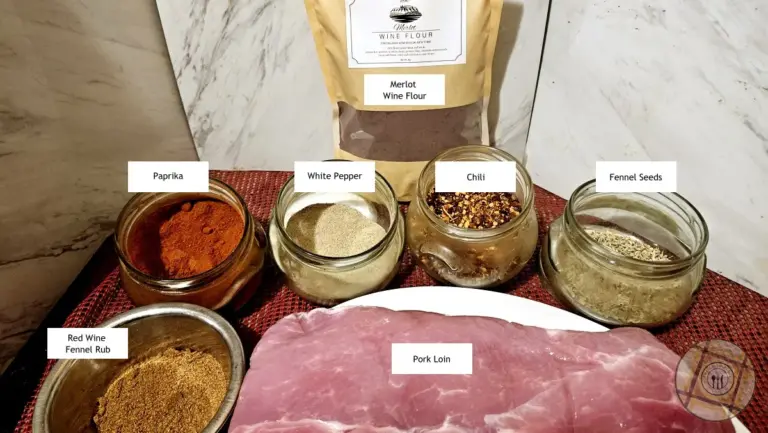
- 3 tablespoon (44.36 ml) Merlot Red Wine Powder, 2 tablespoon (29.57 ml) Paprika, 2 tablespoon (29.57 ml) Fennel seed, 1/2 teaspoon (2.46 ml) Chili flakes, 1/2 teaspoon (2.46 ml) White pepperPut the ingredients for the rub in the coffee grinder and process them until you have powder.
Make the Roast
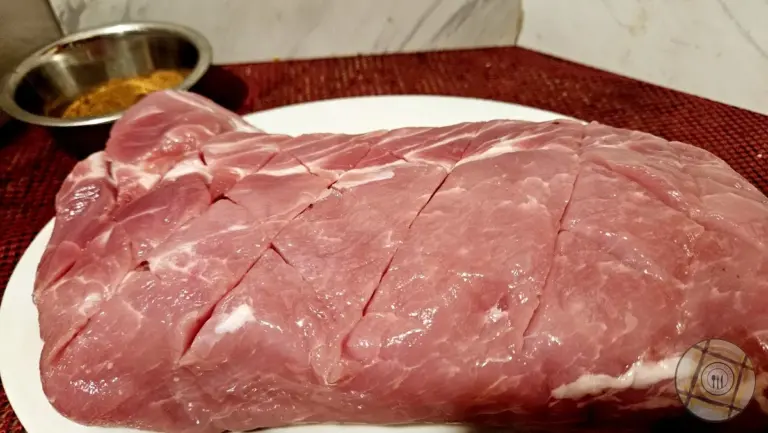
- 3 pounds (1.36 kg) Pork loinRemove as much excess fat as desired them score the roast on both sides. Scoring lets the seasoning get deep into the muscle fiber.
- Rub the mixture thoroughly all over the roast and deeply into the scores. Put the roast on a spit. Let the roast rest in the refrigerator for at least 30 minutes.
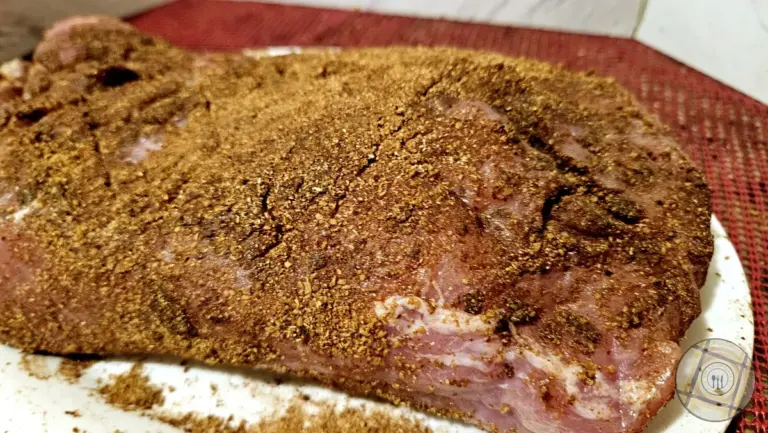
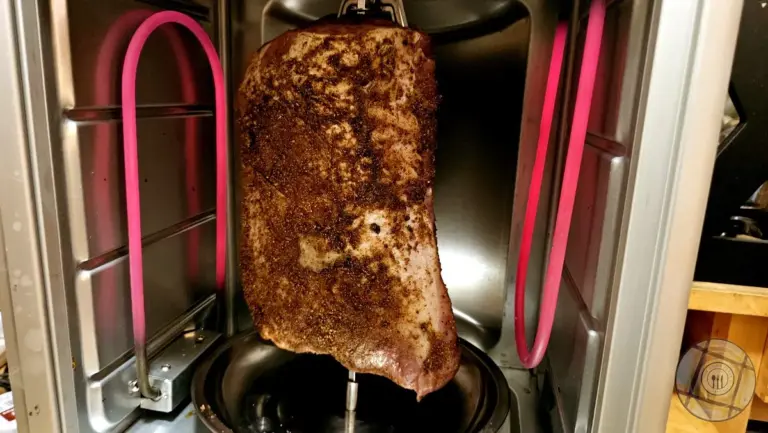
- Put the roast on the spit in the rotisserie and set it for 350 °F (177 °C) for 40 minutes. Check the roast with an instant-read thermometer. Turn off the oven when the roast reaches 143 °F (62 °C). Let the roast sit in the oven for about 10 minutes with the door closed. The heat will carry over to 145 °F (63 °C) while the pork rests.
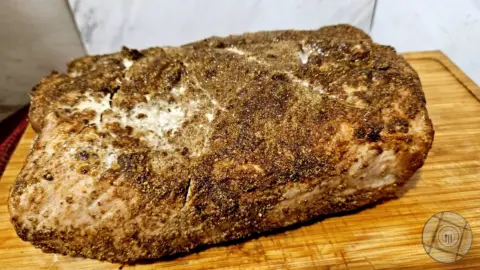
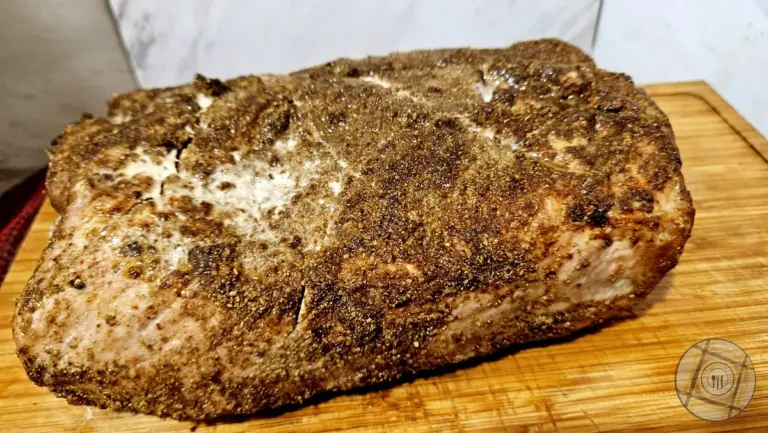
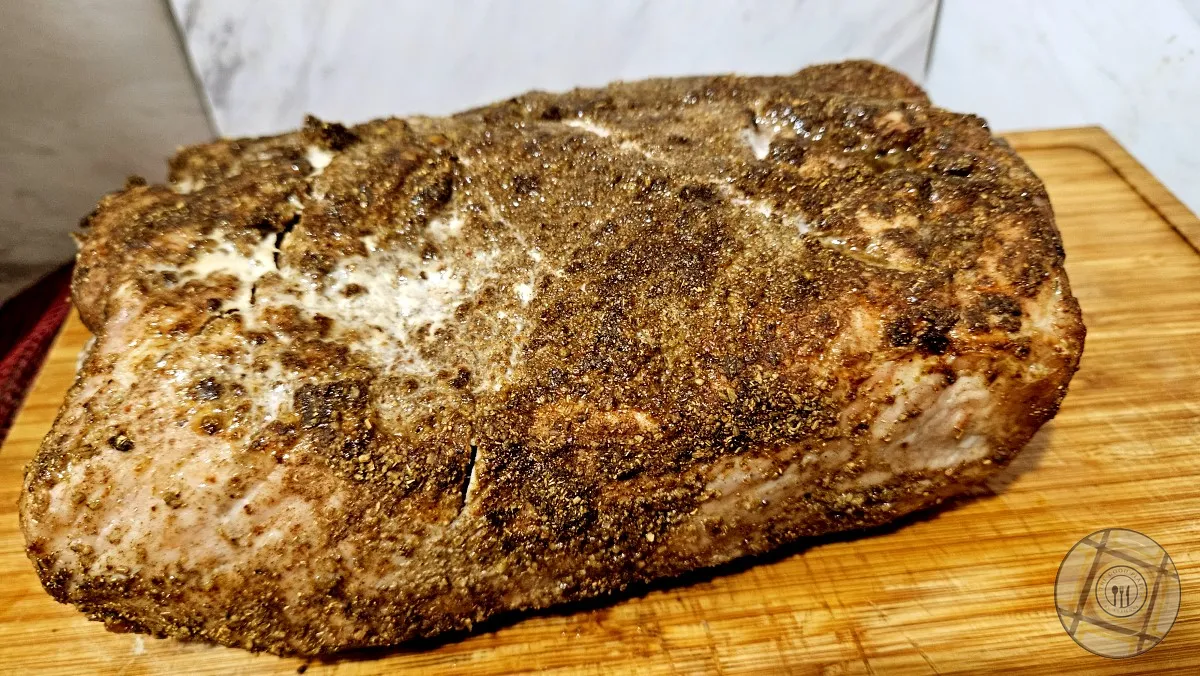
- Remove the roast from the spit and let it rest for 10 minutes before carving.
- Carve the roast into thin to medium slices and enjoy!
Video
Nutrition
Transcript of Red Wine and Fennel Crusted Pork Loin
Transcript
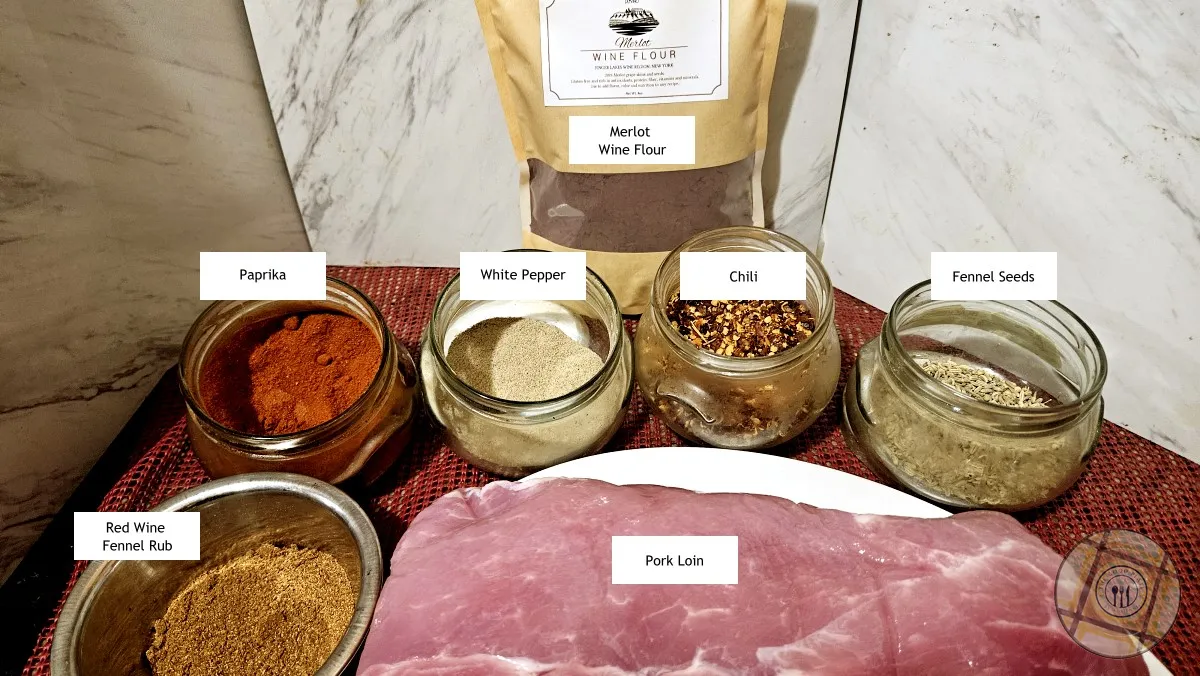
Good afternoon, and welcome to The Good Plate's Kitchen. Today we are making an experiment with a pork roast, and I want you to see the ingredients that we have. This is very important. This is red wine powder. It has all the flavor of red wine without the liquid. Paprika. White pepper, chili, and fennel seed. And this is pork.
This is what the spice rub looks like after it has been in a coffee grinder. I'm going to take this, and we're going to put this in a vertical rotisserie. As you can see, I scored this, because I want to be sure the seasoning really gets in there. I scored both sides, and I removed a lot of the fat cap. This is going in a vertical rotisserie, and that fat is just going to drip off.
And here it is in the rotisserie. It's spinning, and see, the crust is not coming off. So it was a good thing that we let it sit.
Well, here it is out of the rotisserie. It is resting now, and then we're going to cut it. But look at how gorgeous it came out. Look at that. Isn't that beautiful? And here is our beautiful pork roast. I'm going to have a taste and see how it came out. Look at that beautiful crust. All right, gorgeous. It's tender and so flavorful.
Thank you for watching and listening. We'll see you next time on The Good Plate. As always, remember: Forever Forward, Forever Flavorful, YUM YUM!