
What's on Your Plate
Dry brining seasons poultry deeply by using salt to draw out moisture, dissolve, and reabsorb, pulling sugar and herbs into the meat through osmosis; it creates juicier meat and crispier skin than wet brining, with less mess and better control.
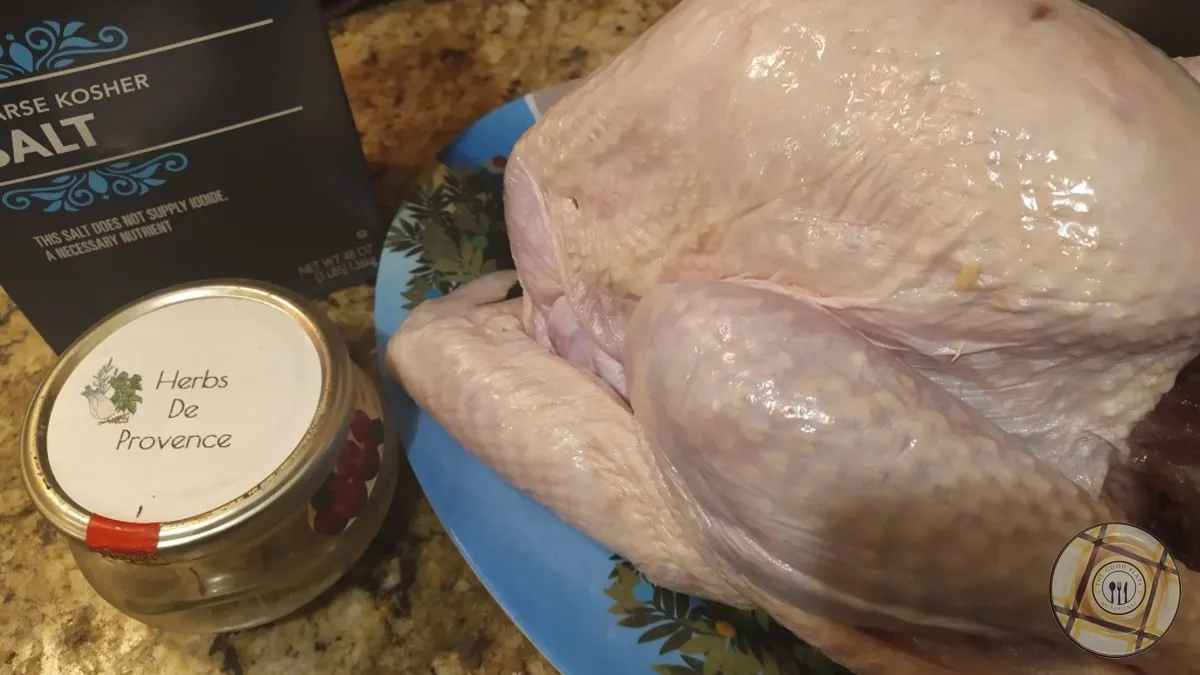
Dry brining is one of the simplest and most reliable ways to prepare turkey or chicken for roasting. It requires no buckets, no boiling, no wrestling with a waterlogged bird, and no rearranging the refrigerator to fit a giant pot. What you get in return is juicier meat, deeper flavor, and the crispest skin possible.
Today, I’m going to show you why dry brining works, what the salt and sugar actually do, how the seasonings penetrate the meat, and a little history about how brining came to be.
If you prefer a wet brine, or want to compare the two, I also have a wet brine recipe.
As always, follow USDA recommendations1 for temperature and and storage.
A Brief History of Brining
Brining is an old technique. Long before refrigeration, people preserved meat by packing it in salt. Salt pulled out moisture and prevented bacterial growth. Over time, cooks learned that meat treated with salt not only kept longer, it also tasted better and stayed juicier when cooked.
Eventually, sugar, herbs, and spices were added to balance the harshness of pure salt curing. This evolution led to the lighter preservation and flavoring method we call brining today. While modern brining is no longer about preventing spoilage, it still uses the same scientific principles: salt changes the structure of the meat and helps moisture stay where it belongs.
Dry brining is essentially the modern cook’s streamlined version of this heritage technique.
Why Dry Brining Works
Dry brining uses just a handful of ingredients—salt, sugar, poultry seasoning, and Herbes de Provence. When rubbed onto the skin, the salt begins to pull moisture out through osmosis. That moisture dissolves the salt, sugar, and herbs, forming a natural brine right on the surface. Over several hours, the seasoned brine is pulled back into the meat.
This movement changes the protein structure just enough to help the meat retain more of its natural juices during cooking. The result is tender, flavorful poultry that doesn’t dry out.
The sugar is not for sweetness. Sugar helps balance the salt, and it aids browning. When the bird roasts, the sugar helps create a deeper, caramelized color on the skin.
The Seasonings: How They Move into the Meat
Dry brining doesn’t rely only on salt. The herbs matter too.
Poultry seasoning contains sage, thyme, marjoram, rosemary, and sometimes nutmeg. These flavors evoke the warmth and aroma of classic roasted turkey, especially around Thanksgiving.
Herbes de Provence adds complexity with its mixture of thyme, savory, basil, and lavender. When used sparingly, the lavender offers a subtle floral note that makes the overall flavor more refined.
Osmosis pulls traces of these seasonings beneath the skin. They do not penetrate inches deep, but they move far enough to create noticeably better flavor throughout the meat rather than sitting only on the surface.
Dry Brine vs Wet Brine
A wet brine submerges the bird in a salt-and-sugar solution. It works beautifully and adds moisture, but it is messy, requires large containers, and softens the skin.
A dry brine uses the same basic science without the water. You get deep seasoning, better browning, and crisp skin because the bird dries out slightly in the refrigerator. There’s no mess, no sloshing water, and the results are consistently excellent.
If you want to compare the two, you can find the wet brine recipe here.
Serving and Storage
Serving
You can add other herbs and spices to this brine, and you can use it for other foods, like beef, pork or lamb.
Storing
This is important. Unless you pour the amount you want to use into another container or on your hand, you are not advised to keep any extra dry brine if your fingers have touched the meat. This prevents cross-contamination and keeps everyone healthy.
If your fingers have not been in contact with the brine, you may store any leftover brine in a cool, dry place.
FAQ About Dry Brine
Can I dry brine a self-basting or kosher turkey?
No. Those birds already contain added salt.
How far in advance can I dry brine?
Up to 48 hours in the refrigerator.
Does dry brining make the meat salty?
No. The salt distributes evenly and pulls flavor inward, rather than sitting on the surface.
Will dry brining make the skin crisp?
Yes. Leaving the bird uncovered helps the skin dry, which leads to excellent browning.
Is it safe to brine?
Yes. Follow USDA guidelines for safe poultry handling.
Conclusion
Dry brining is where tradition meets modern kitchen practicality. It uses centuries-old knowledge of salt and osmosis to give you tender, juicy poultry with remarkably crisp skin. Once you understand what the salt, sugar, and herbs actually do, dry brining becomes the most reliable and effortless way to prepare turkey or chicken for roasting.
Dry Brine Recipe
Email Me the Recipe
Enter your email address and we will send it straight to your inbox.
Dry Brine
If you purchase any of the products through these affiliate links, I get a few pennies that help keep The Good Plate open. I use these products myself and want you to be able to easily find them.

Ask the Cooking Genie
Have a question about this recipe that isn't answered in the post? The Cooking Genie is at your service. The Genie knows this recipe well, but even genies slip up now and then — please use your own good judgment in the kitchen. Per genie union rules, the Genie may grant three questions per visit. For anything beyond this recipe, please use the contact form.
Ingredients
- 1/2 cup Kosher Salt
- 1 teaspoon Sugar
- 1 tablespoon *Poultry seasoning
- 2 teaspoon Herbs de Provence
Instructions
- Mix all the ingredients together. Use the brine on the outside and inside of the bird. Brush any leftover brine off the bird when you are about to cook it.
Video
Nutrition
Transcript of Dry Brine
Transcript
Good afternoon.
And welcome to the Good Plates Kitchen.
Today, I want to talk to you about one of
the most transformative steps in preparing
any turkey or chicken or any poultry for
that matter.
Brine. Whether you
go with a dry brine or a
wet brine, like this
one, what really matters
is understanding why it works and what
each ingredient does.
Let's start with the science.
Briny is all about flavor and moisture
retention.
Salt is the key player here.
When salt hits the surface
of your meat, it dries
out a little bit of the
moisture through osmosis.
That salty liquid dissolves the salt
crystals and then over time, it re-abs the
herbs back into the meat, carrying flavor
with it.
This loosens the protein structure just
enough so when the brew cooks,
it holds onto its natural juices instead
of drying out.
Now, the sugar isn't there just to be
sweet.
Sugar helps balance the salt and
encourages better browning when the meat
cooks, giving you that golden,
beautiful, like that one.
Salt sets the foundation.
Sugar completes the flavor balance.
Now, here's where we get into the fun
part.
It's the seasonings.
In my wet brine, I use several ingredients
and you can find the recipe on the website.
And for my dry brine, I use four basic
ingredients.
So, let's talk about these ingredients for
a moment.
Poetry Siesting brings the familiar warmth
of sage, thyme, margarine, and rosemary.
These cozy savory notes that
make a turkey taste like Thanksgiving,
it's like giving your bird its
own built in stuffing aroma.
And then, there's herbs to grow else.
It's a beautiful blend of French herbs,
like thyme, basil, savory, and lavender.
It adds this elegant floral quality that
works incredibly well with roasted poultry.
It rounds out the flavor and gives the
taste of sophistication.
Together, these herbs
infuse right into the
meat, thanks to the salt
driven osmosis process.
Whether you're using a dry brine or a wet
brine, submerging your bird in a saloon
solution for 8 to 12 hours, or a dry
brine, where you rub the same mixture onto
the meat and let it rest uncovered in the
fridge, the principle is the same.
The salt starts the movement, and the
sugar and herbs ride along.
I personally love a dry brine when I want
crisp skin and easy cleanup, but if you've
got the space and the time a wet brine can
give you deep, even seasoning throughout.
Either way, remember.
Brining isn't just about salt.
It's about creating a flavorful exchange.
The salt opens the door, and the sugar,
and the herbs walk right in.
You can find the wet brine
recipe on the good plate, and
keep an eye out for more
holiday prep tips coming soon.
Thank you for watching, thank you for
listening, and remember, forever forward,
forever flavorful.
Yum yum!
See you next time!
- USDA Brining Recommendations - https://www.usda.gov/about-usda/news/blog/brining-safely-will-bring-tender-flavorful-meat-thanksgiving-table ↩︎