What’s on Your Plate
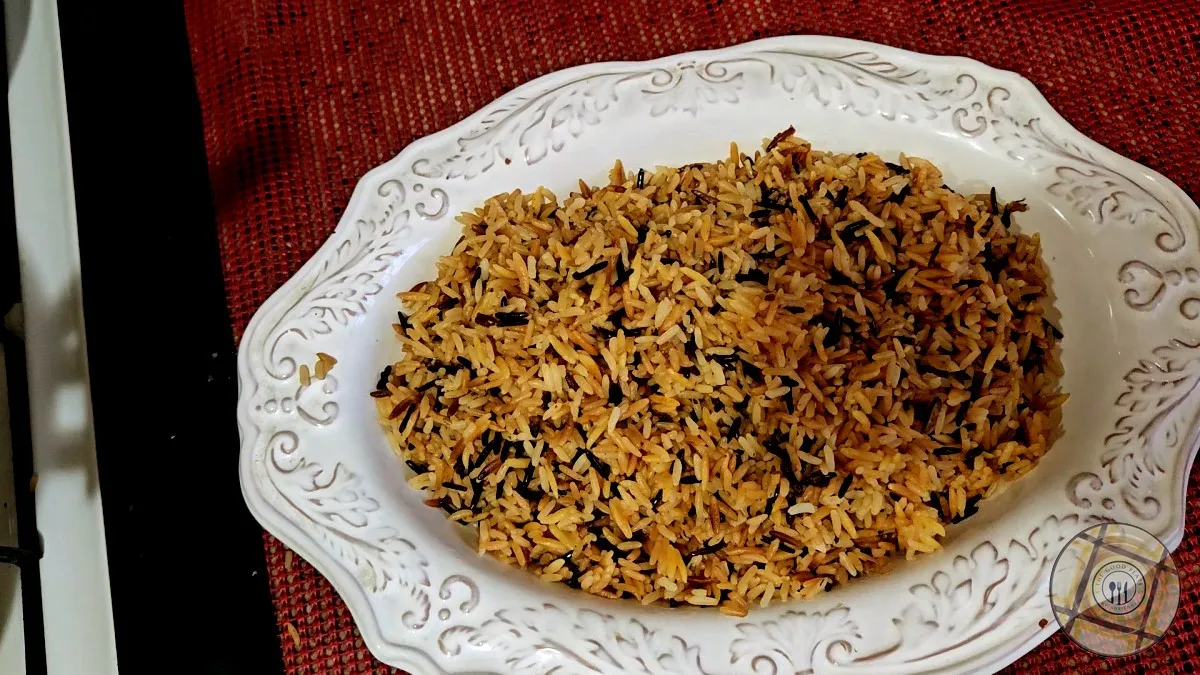
Pilaf made by toasting wild rice, orzo, and converted rice in butter before cooking in broth in the Instant Pot for a perfectly fluffy texture.
Use converted rice so the grains stay separate and firm under pressure.
Chicken base creates rich broth without leaving a forgotten carton to become a science experiment.
Fine herbs add a fresh, delicate flavor that complements the nuttiness of the wild rice.

Let’s make wild rice pilaf that’s fluffy, flavorful, and full of history. If you’ve ever opened a box of Rice-A-Roni, you already know the idea: toasted grains simmered in savory broth until each bite is distinct and aromatic. But this time, we’ll make it from scratch, in the Instant Pot. You’ll learn why each step matters so you can make perfect pilaf every single time.
The True Story Behind Rice-A-Roni
Good food tells a story, and Rice-A-Roni’s begins not in a factory, but in a San Francisco boarding house.
When Tom and Lois DeDomenico rented a room from Pailadzou Captanian, they didn’t realize they were about to learn a recipe that would change American weeknight dinners.
Pailadzou was a survivor of the Armenian Genocide. She built a new life in the United States as a seamstress, even sewing draperies for President Franklin D. Roosevelt’s home in Hyde Park, New York. In San Francisco, she shared her family’s pilaf recipe with Lois, showing her how to toast rice and pasta in butter before simmering in broth.
When Lois made the dish for her husband’s family, her brother-in-law Vince DeDomenico saw its potential. In 1958, they boxed the idea and launched “Rice-A-Roni, The San Francisco Treat.” So every time you toast rice and pasta together, you’re cooking in Captanian’s footsteps, honoring a simple comfort food that became an American icon.
Wild Rice Pilaf Ingredients
Understanding Wild Rice
Before we start cooking, let’s clear up a common misconception: wild rice isn’t rice at all. It’s the seed of an aquatic grass (Zizania palustris) that grows naturally in the lakes of Minnesota and Canada. Its dark color, earthy aroma, and nutty flavor give pilaf a depth plain rice can’t match.
Because wild rice takes longer to cook, I balance it with orzo and converted white rice. Together they create harmony — orzo adds silkiness, wild rice adds chew, and converted rice keeps everything fluffy and distinct.
A Closer Look at Orzo
Orzo often confuses people because it looks like rice but is actually a pasta made from semolina flour, the same wheat used for traditional Italian pasta. The word orzo means “barley” in Italian, a nod to its shape.
In pilaf, orzo toasts beautifully in butter, turning golden and fragrant before the broth goes in. Traditional Armenian pilaf uses broken vermicelli noodles, but orzo holds its shape better under Instant Pot pressure. Both are delicious — just note that because both orzo and vermicelli are wheat-based, the dish isn’t gluten-free unless you use a gluten-free substitute.
Converted vs. Regular Rice
You may be wondering why we use converted rice instead of regular white rice. Converted rice, also called parboiled rice, is partially cooked in its husk before it’s dried and milled. That process locks in nutrients and gives each grain firmness so it doesn’t turn sticky or mushy under pressure.
In pilaf, that firmness is exactly what you want, fluffy grains that hold their shape and soak up flavor. Regular long-grain rice works if that’s what you have, but converted rice delivers the best texture, especially when paired with wild rice and orzo.
What Are Fine Herbs?
When a recipe calls for fine herbs, it doesn’t mean a spice mix like “Everything Bagel,” “Season-All,” or
“Everything but the Elotes.” Fine herbs, fines herbes in French, are a blend of delicate green herbs that add brightness and lift without overpowering the dish. The traditional mix includes parsley, chives, tarragon, and chervil.
Fine herbs bring subtle flavor rather than bold spice. They add a fresh, green note that balances the richness of butter and broth while letting the nutty wild rice shine through. Fines herbes are available in the spice section of your supermarket.
If you happen to have those herbs growing fresh in your garden, more power to you! Stir the herbs in when the rice has finished cooking so they keep their bright flavor.
Why Instant Pot Wild Rice Pilaf Works
Toasting the grains in butter before cooking coats each one in fat, which prevents clumping and builds deep flavor. The Instant Pot’s even pressure cooks everything consistently. There are no scorched bottoms or gummy rice. The combination of wild rice, orzo, and converted rice gives a balance of chewy, tender, and silky textures in every bite.
For a vegan or dairy-free version, substitute olive oil for butter and *vegetable base for *chicken base. You’ll still get that buttery flavor and glossy texture, no animal products required.
Serving and Storage Wild Rice Pilaf
Serving
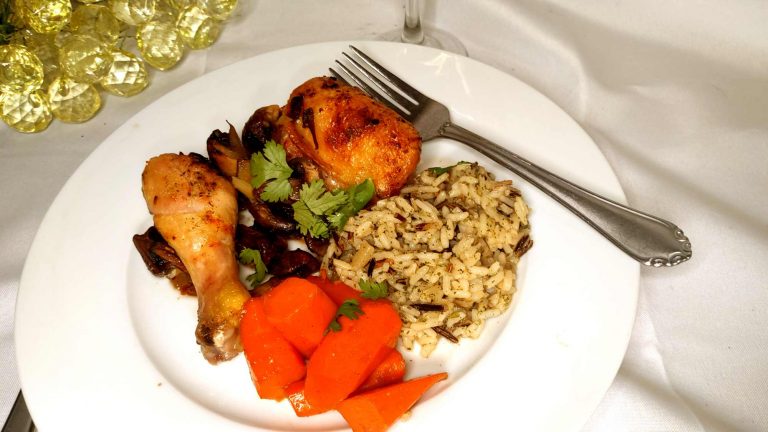
Serve this pilaf alongside Baked Chicken with Mushrooms and Wine, pork chops, or our Steelhead Trout. For a vegetarian meal, top it with sautéed mushrooms or roasted vegetables, or sprinkle chopped nuts for crunch. Garnish with fresh parsley or thyme for color and brightness.
Storing
Store leftovers in a covered container in the refrigerator for up to four days. To reheat, add a spoonful of water or broth and fluff gently with a fork. You can also freeze the pilaf for up to three months. You can portion out leftovers and *vacuum seal them.
FAQ about Wild Rice Pilaf
Q: What’s the difference between converted and regular rice?
A: Converted rice (parboiled) is partially cooked in its husk, so it stays firm and fluffy. Regular rice is softer and can clump under pressure.
Q: Why do you use chicken base instead of stock?
A: Chicken base provides concentrated flavor without waste. A spoonful mixed into hot water replaces boxed stock — no forgotten carton experiments lurking in the fridge.
Q: What are fine herbs?
A: Fine herbs are a traditional French blend of parsley, chives, tarragon, and chervil — not a pre-mixed spice blend. They add freshness without salt or heat.
Q: What’s the best wild rice to buy?
A: Pure, hand-harvested wild rice offers the richest flavor and chew, but a wild rice blend cooks faster for busy nights.
Q: Can I make this on the stovetop?
A: Absolutely. Toast the grains in butter or oil, add broth, cover, and simmer until tender and fluffy.
Q: Can I make this vegan?
A: Yes! Substitute olive oil for butter and vegetable base for chicken base for a vegan version with the same flavor and texture.
Q: Is this dish gluten-free?
A: Not as written. Both orzo and vermicelli contain wheat. To make it gluten-free, use gluten-free orzo or another small gluten-free pasta.
Q: What pasta did the original Armenian recipe use?
A: Traditional pilaf uses broken vermicelli noodles, which toast in butter for a firmer texture. Orzo is a modern substitute that performs beautifully in the Instant Pot.
Q: What exactly is orzo?
A: Orzo is a rice-shaped pasta made from semolina flour. It toasts beautifully, absorbs flavor quickly, and adds a silky bite to pilaf.
Wild Rice Pilaf Recipe
Email Me the Recipe
Enter your email address and we will send it straight to your inbox.
Wild Rice Pilaf for the Instant Pot
Tips from the Chef
Equipment

If you purchase any of the products through these affiliate links, I get a few pennies that help keep The Good Plate open. I use these products myself and want you to be able to easily find them.
Ingredients
Pilaf
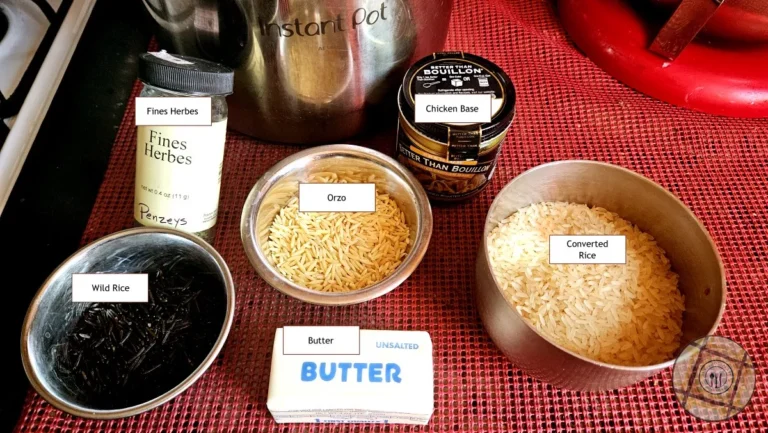
- 2 tablespoon Butter, unsalted
- ½ cup Wild rice
- ½ cup Orzo
- 1 cup Rice, converted
Broth
- 2 tablespoon *Chicken base
- 2 ¼ cup Water, boiling
- 1 teaspoon Fines herbes
Finishing
- 1 teaspoon Butter, unsalted
Instructions
- Mise en Place
- If your inner pot cannot go on the stovetop, then use the Sauté function.
- 2 tablespoon ButterMelt the butter in the inner pot of the Instant Pot.
- 1/2 cup Wild rice, 1/2 cup Orzo, 1 cup RiceAdd the orzo, wild rice, and converted rice to the melted butter.
- Stir constantly until the mixture starts to brown. Turn off the heat.
- 2 tablespoon Chicken base, 2 1/4 cup Water, 1 teaspoon Fines herbesMake the broth by adding boiling water to the chicken base. Stir so it completely dissolves then add the fines herbes.
- The pot will be very hot. Carefully add the broth to the pot. It will boil and steam violently, so please use caution.
- Seal the pot and set it to White Rice, or 12 minutes on high. When the cooker is done, let it Natural Release for 5 minutes then Quick Release,
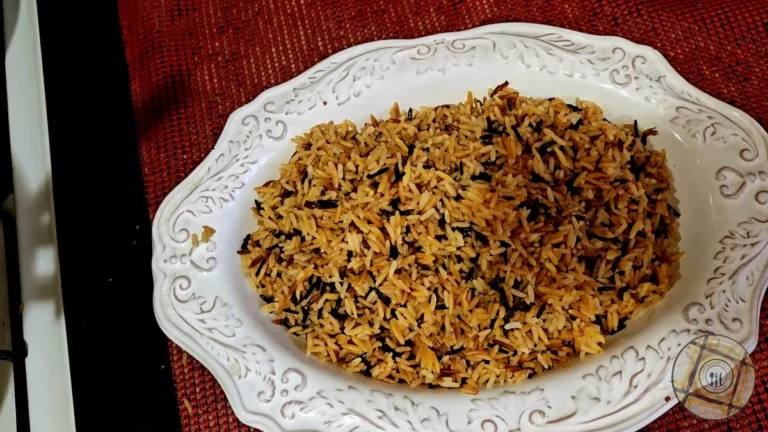
- 1 teaspoon ButterRemove the top, and butter and stir to fluff.
Video
Nutrition
Transcript of Wild Rice Pilaf Video
Transcript
Good afternoon and welcome to the Good
Plate’s Kitchen.
Today we are making wild rice pilaf.
We’re gonna do it in the Instant Pot.
Let me introduce you to my friends.
This is wild rice.
And this is orzo.
And this is converted white rice.
You can use plain old long grain rice or
whatever rice you happen to have on hand,
but we like it with the converted.
And these are fine herbs
to give a little flavor.
And we’re going to be using Better than
Bouillon chicken base.
Because this is much better
than having a container of chicken
stock become a science
experiment in your refrigerator.
And of course, unsalted butter.
Okay, let’s get started.
Okay, first thing we’re gonna do is we’re
going to melt this butter.
And this pan, this is the inner pot of
the Instant Pot.
Some Instant Pot’s are able to go on the
stove top and some are not.
So make sure that the one that you have
can go on the stove top.
If it can’t, you can just use the regular
saute function on your Instant Pot.
That works just as well.
Okay, the butter is melted.
And we’re gonna add the orzo first.
Doesn’t really make any difference
what order, but I’m just gonna do that.
Actually, now I’m gonna add wild rice.
Normally, you would cook wild rice a much
longer time than you would regular rice.
Because it’s a hardier kind of rice.
Wild rice isn’t actually technically rice,
but anyway, that you can add wild rice.
If you read about it in the blog post.
Anyway, next thing we’re gonna do is we’re
gonna add the converted rice.
Wild rice takes longer to cook.
Normally than regular rice.
But since we still want the
chewiness in this dish, it’s
gonna cook at the same time
that the others are cooking too.
It’s important to stir when you’re making
this.
Otherwise, the pieces do not get equally
browned.
So if you are making Rice-a-Roni out of the
box and it says stir and wait until it
gets browned, it really means that.
That’s how you make pilaf.
Oh, I see a little bit that’s browning a
little bit over here in the corner.
Okay, we have some definite browning going
on here.
I don’t want to burn it.
You can see a nicely browned that’s gotten
in comparison.
Okay, that’s great.
Look at that.
I’m gonna turn the heat off because I
don’t want it to burn.
Okay.
Oh, it’s time to make the broth.
You have the chicken base in there.
Okay, and I’m gonna add the fine herbs.
Generous.
Okay, and stir it up.
All right, that is ready to go.
Now, I add this to the rice, which is hot.
Watch out.
It’s gonna make a lot of noise.
That’s wonderful.
Make sure that nobody escaped.
Now we’re gonna take this and put it into
the instant pot.
And we’ll be back when the rice is cooked.
And now our beautiful rice pilaf is done
too.
That isn’t that gorgeous.
Okay, we’re gonna go eat that.
Thank you for watching.
See you next time on the good plate.
Yum, yum!