Summary
The history of Caesar salad, how this eggless version lowers cholesterol while keeping flavor and body, and how the emulsification method uses dry mustard for a thick, stable dressing
What’s on Your Plate
Yes, you can have Caesar Salad Dressing if you are reducing cholesterol. This dressing does not have eggs or mayonnaise. Mustard is used to emulsify lemon and olive oil.
I have always been fascinated by ancient history, especially Egypt and Rome. This Eggless Caesar Dressing is probably something that Julius Caesar himself may be enjoyed, but it was not invented by him – it was invented by Caesar Cardini, but it carries his name and his legacy of boldness.
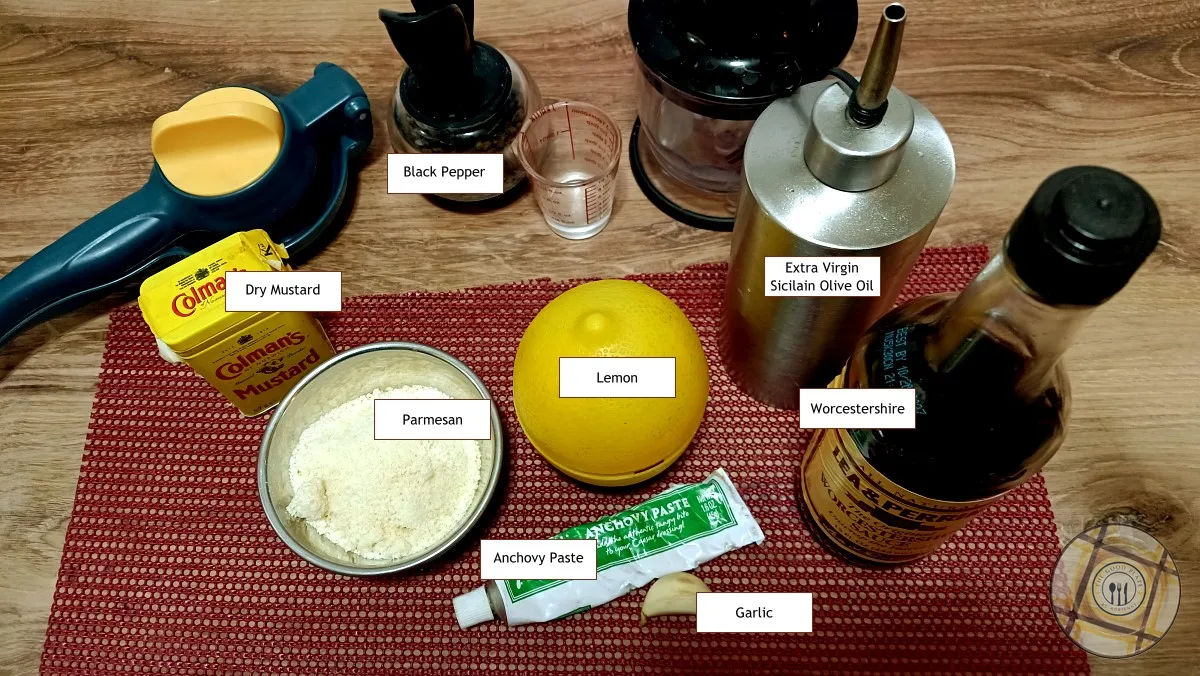
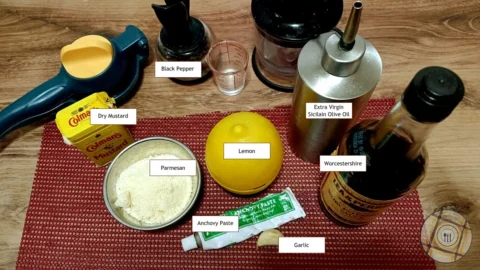
The classic dressing relies on raw egg or mayonnaise for body. Mine does not. Instead, I use good Sicilian extra virgin olive oil, fresh lemon juice, garlic, Parmesan, anchovy paste, Worcestershire, black pepper, and dry mustard to emulsify.
A Brief History of Caesar Salad
Caesar salad was not born in ancient Rome. It was created in the 1920s by Italian immigrant Caesar Cardini in Tijuana, Mexico. During Prohibition, Americans crossed the border to dine and drink freely. Cardini needed something dramatic to serve tableside for important guests, and the now-famous salad was born.
The original dressing used coddled eggs, olive oil, garlic, lemon, Parmesan, Worcestershire sauce, and whole anchovies. It was theatrical, rich, and memorable.
Yet if we step further back, toward the Rome of Julius Caesar, we find something simpler. Roman cuisine relied heavily on olive oil, hard cheeses, fermented fish sauces, and sharp acids. Anchovy paste is not far from garum, the fermented fish condiment Romans adored. Lemon did not dominate Roman cooking as it does today, but sour elements were prized.
Why Eggless Caesar Dressing works
Lower in Bad Cholesterol
Let us be clear. This dressing still contains fat. Four ounces of olive oil is not nothing. Parmesan contributes saturated fat. However, cholesterol and fat are not the same thing. The primary source of cholesterol in traditional Caesar dressing is egg yolk. Mayonnaise-based versions compound that. By removing eggs entirely, we eliminate that direct cholesterol contribution.
Olive oil contains no cholesterol because cholesterol exists only in animal products. Parmesan does contain some cholesterol, but far less than egg yolk-based emulsions. If you are managing cholesterol intake, reducing egg yolks is a practical step. The American Heart Association provides guidance on cholesterol management and dietary fat balance.
You still get richness from the olive oil and saltiness from Parmesan and anchovy paste. Salt and umami create the perception of depth and indulgence without needing additional dairy or egg.
Emulsification
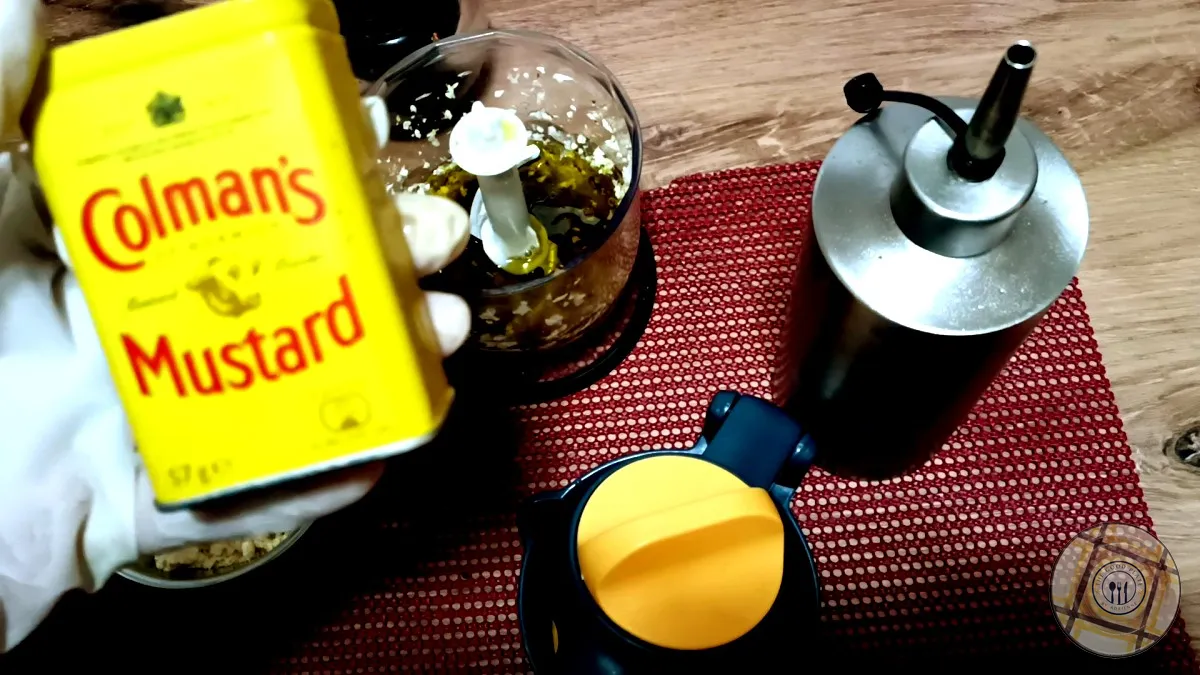
Instead of Dijon, which contains vinegar and additional flavoring, use plain dry mustard such as Coleman’s. Dry mustard contains compounds that help oil and acid bind together. When you combine olive oil and lemon juice, they naturally separate. The mustard stabilizes the mixture, allowing it to emulsify.
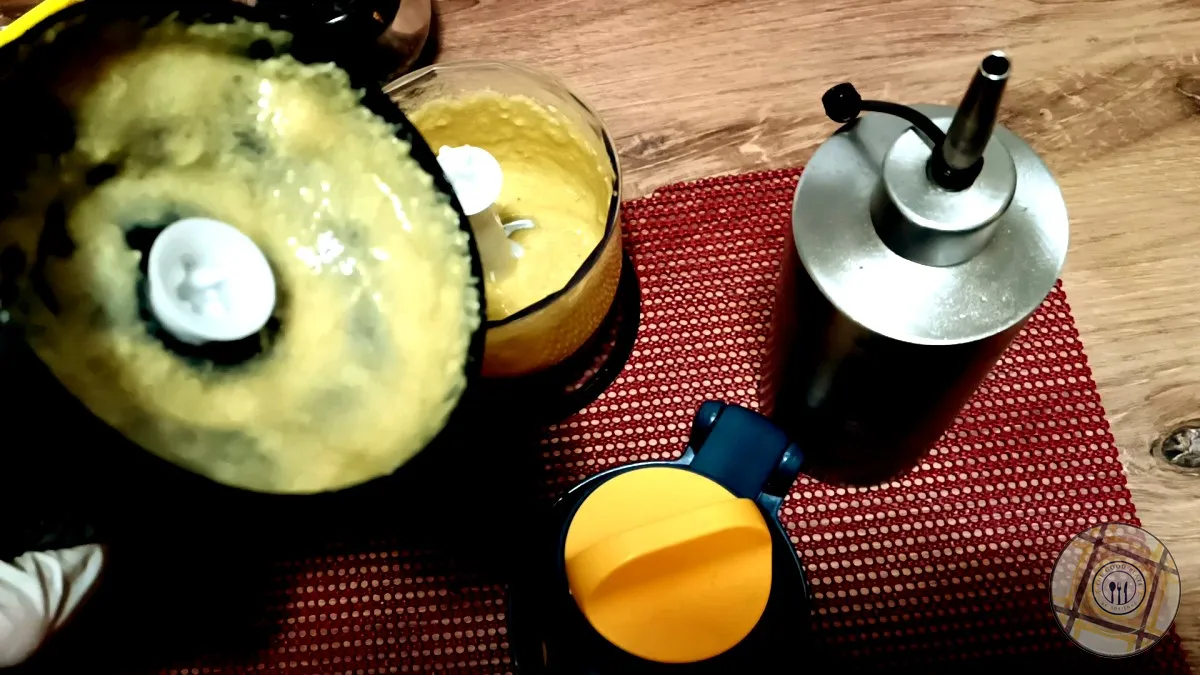
Just one-eighth of a teaspoon is enough. The dressing thickens beautifully when blended. That slight body you see is proof the emulsion worked. It is culinary chemistry, and it is dependable.
Equipment
I used the small food processor that comes with the Braun *Immersion Blender. You can very finely mince your garlic or use a garlic press. If you are going to make this by hand, get the garlic as tiny as possible, then add mustard and lemon juice. Pour the oil in slowly all the while whisking and add the cheese at the end. But, really a small food processor is going to do the best job.
Common Mistakes and Gotchas
A list of common mistakes and Gotchas
- Do not overdo the mustard. More is not better. You need only enough to help emulsify.
- Use fresh lemon juice. Bottled juice lacks brightness.
- Blend thoroughly. If you stop too soon, the dressing may remain thin and separate later.
Serving and Storage
Serving
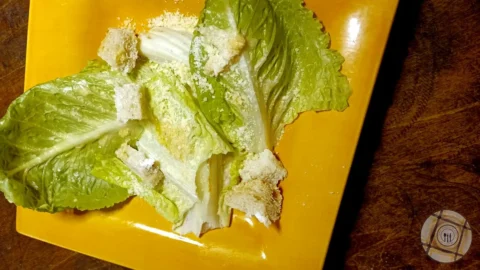
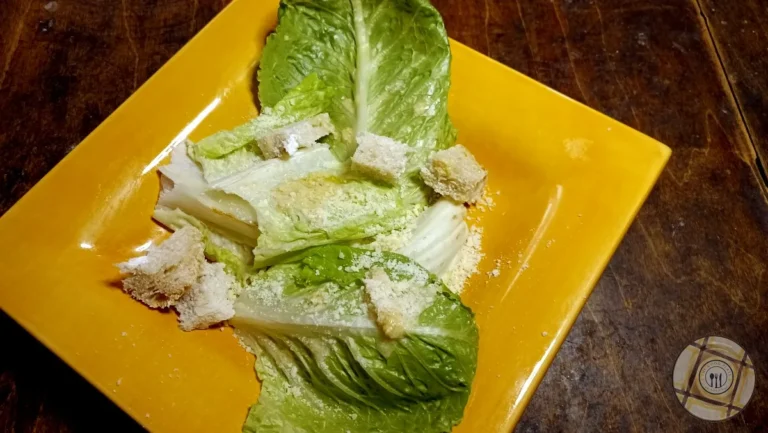
This dressing is assertive. A little goes a long way. Start with about 2 tablespoons per full head of chopped romaine and toss thoroughly. The leaves should be lightly coated, not swimming. Use sturdy romaine hearts. The crisp texture stands up to the acidity and oil. Toss with shaved Parmesan and homemade croutons for structure.
If you want, this dressing also does very well with our Steakhouse Summer Salad or our Salad Base.
Because there are no eggs, it performs well as a marinade for chicken breasts. The acid tenderizes lightly, and the umami penetrates the surface without becoming heavy. If you are managing cholesterol, pair it with lean proteins such as grilled chicken breast or white fish rather than fatty meats.
Storing
Transfer the dressing to a clean glass jar with a tight lid. Refrigerate immediately. It will keep safely for up to 4 days. Since there are no raw eggs, it is more stable than traditional Caesar dressing. However, it still contains fresh garlic and lemon juice, so refrigeration is essential.
Before serving from the refrigerator, let it sit at room temperature for 10 to 15 minutes. Olive oil will thicken when chilled. If it looks slightly separated, shake or stir vigorously to re-emulsify.
If it smells sharp in an unpleasant way, turns green, or the texture changes significantly, then it has turned into a science experiment – toss it. Trust your senses.
FAQ
Does this taste like anchovies?
No. The anchovy paste melts into the dressing and provides salt and umami without overt fish flavor.
Can I omit the anchovy paste?
You can, but you will lose depth. If necessary, increase Parmesan slightly and add a pinch more salt.
I like anchovies, can I add more?
It is best to use anchovy paste for the dressing and serve anchovies as a garnish. Those that like anchovies can enjoy them without frightening the rest of the table.
Is this dairy-free?
No. Parmesan is integral to the flavor. For dairy-free adaptation, nutritional yeast can provide a savory substitute, though the flavor will shift.
Step by Step Photos
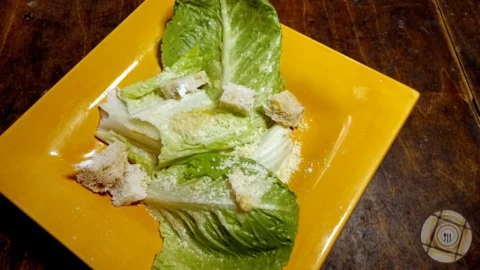
Eggless Caesar Dressing Recipe
Email Me the Recipe
Enter your email address and we will send it straight to your inbox.
Eggless Caesar Dressing
Equipment

If you purchase any of the products through these affiliate links, I get a few pennies that help keep The Good Plate open. I use these products myself and want you to be able to easily find them.
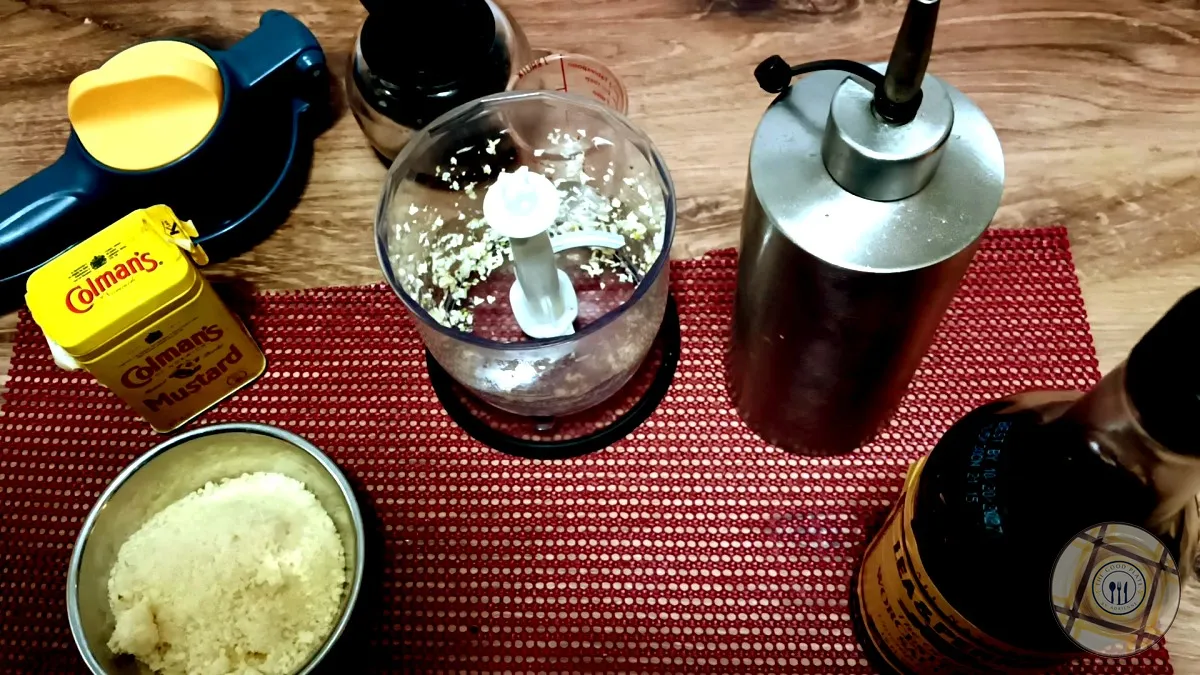
Ingredients
- 4 ounces *Olive oil
- 1 ½ ounce Parmesan
- 2 ounce Lemon juice
- 1 tablespoon Dijon mustard
- 1 ½ teaspoon Worcestershire sauce
- 1 teaspoon Anchovy paste
- 1 clove Garlic
Instructions
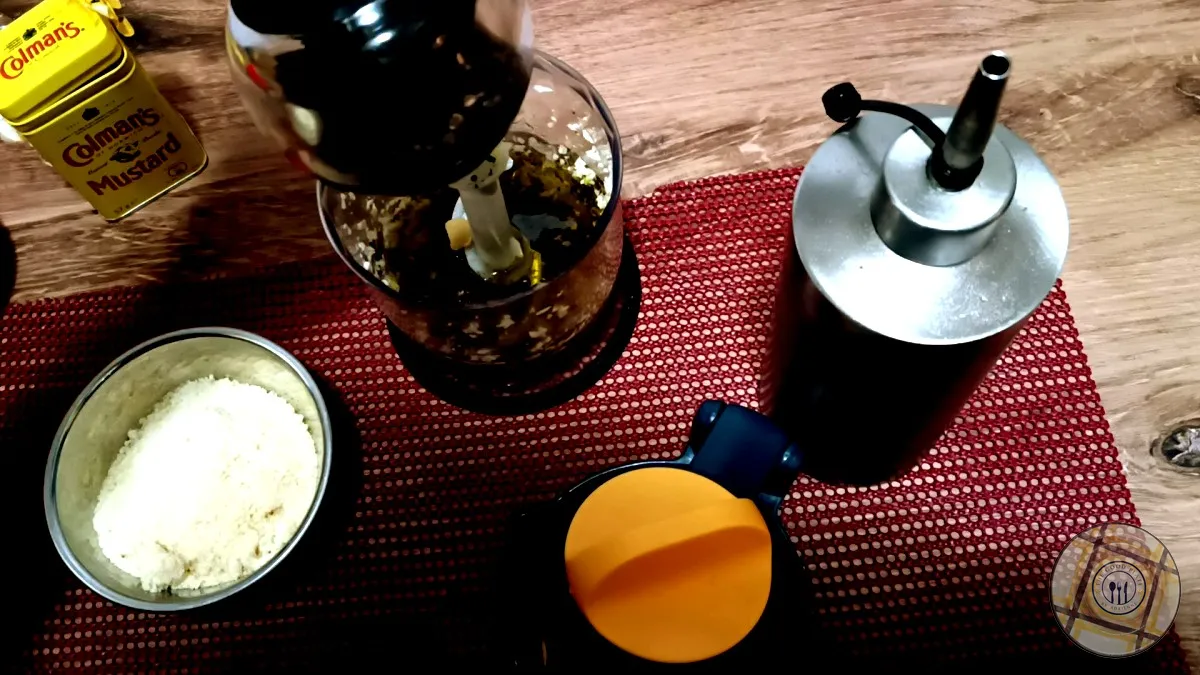
- Gather all your ingredients. Mince or process the garlic finely first.
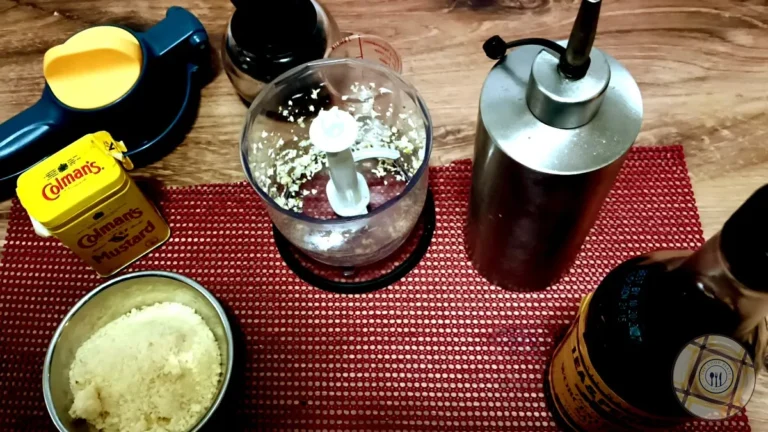
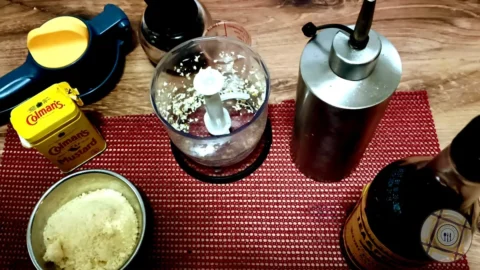
- Add the oil, lemon juice, Worcestershire sauce, and pepper.
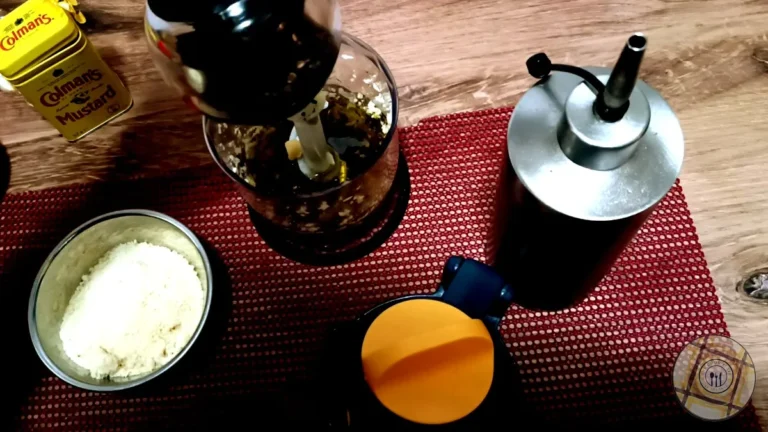
- Add the mustard.
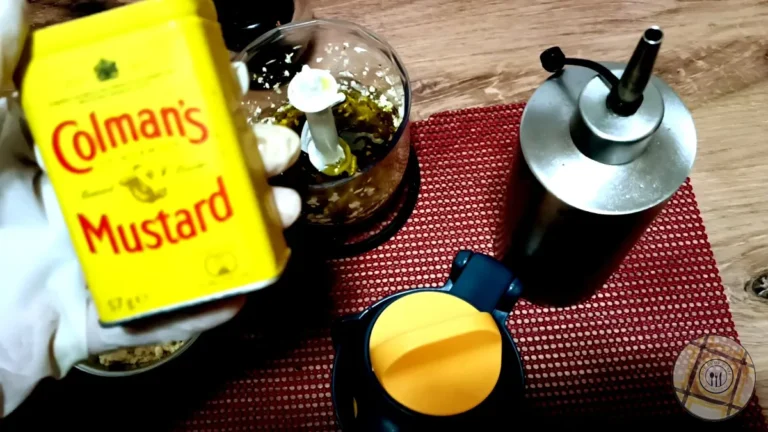
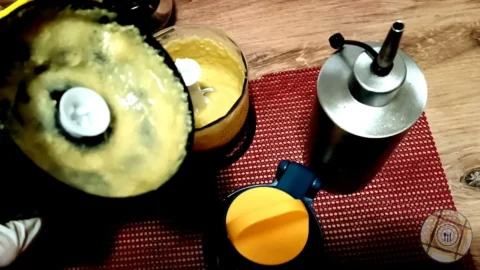
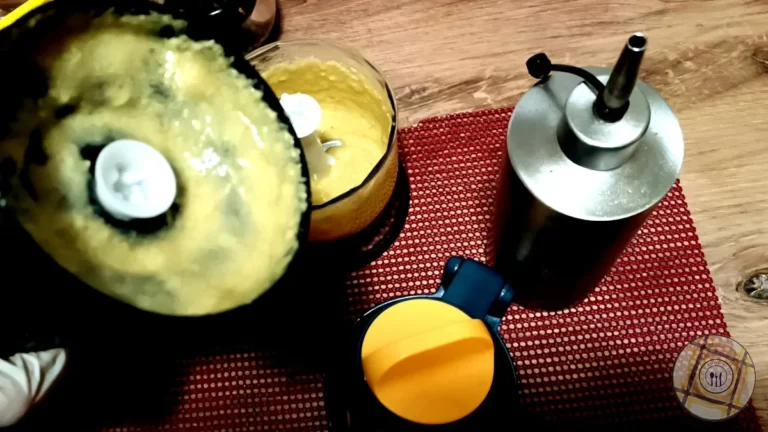
- Add cheese and process until the mixture is thick and creamy.
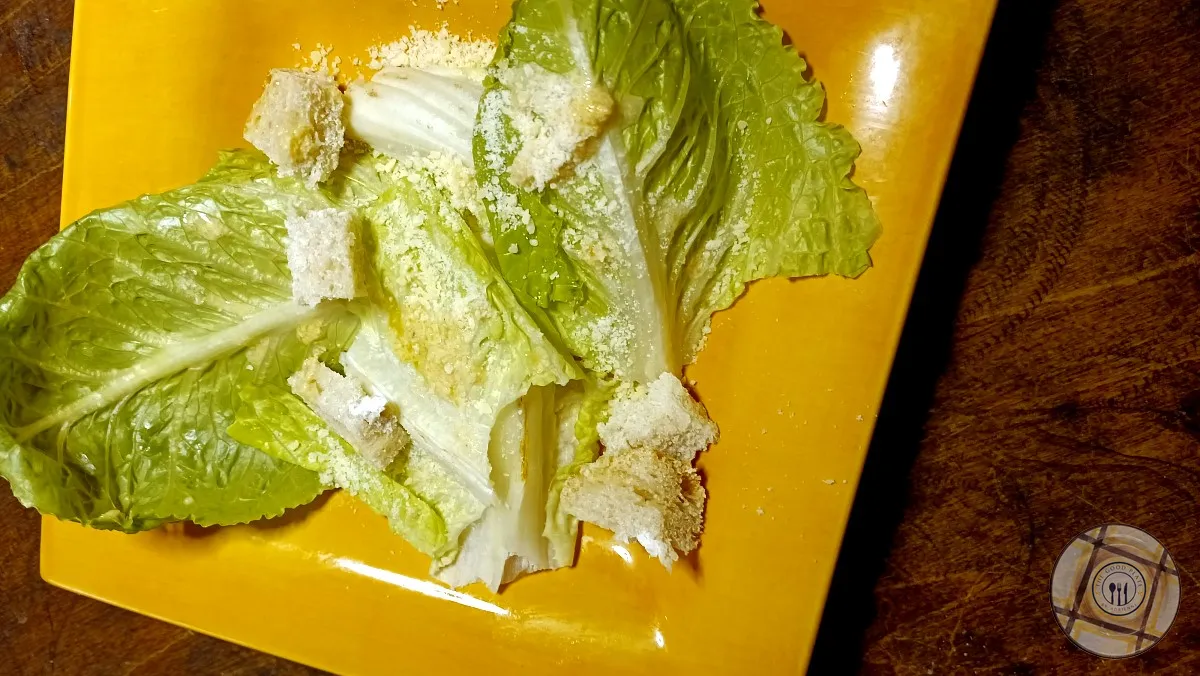
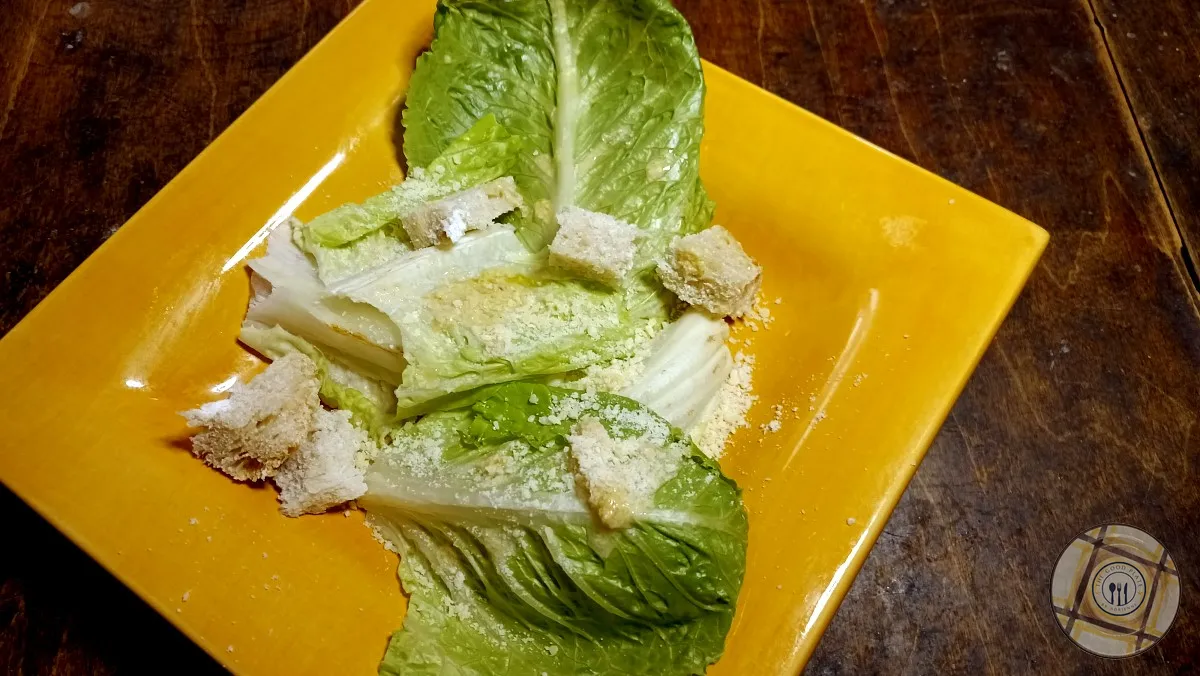
- Serve the dressing over crisp romaine leaves and garnish with grated parmesan and homemade croutons. Enjoy
Video
Nutrition
Transcript of Eggless Caesar Dressing
Transcript
Good afternoon and welcome to the Good Plate’s Kitchen.
Well, today I’m going to talk to you about
making Ides of March Caesar’s salad dressing.
Now, here’s the thing, Ides of March and which was March 15th.
44 BCE, Julia Caesar was told by his wife not to
go to the Senate, but he did and he was killed.
So, we all remember the Ides of March for that reason.
Now, here’s the interesting thing.
Caesar was a very powerful man and people decided to
take that name on if they wanted to feel powerful.
So, we Czar, we have Kaiser, and people like that.
Now, interestingly enough, there was the one man, Mr. Caesar Cardini.
Mr. Cardini was in Mexico.
He was an Italian immigrant, had a restaurant
that served the up and up coming people.
This was during prohibition days and people could go to Mexico so that he could drink.
Anyway, he needed to make some kind of really wonderful dressing for some really
important people and he developed this beautiful
table side salad with this wonderful dressing.
And it became known as a Caesar salad after him and
it was Caesar salad dressing after Caesar Cardini.
So, let’s talk about what’s in Caesar salad.
This one does a little bit different because we’re making this one so it’s not
as dependent on eggs.
The original recipe calls for eggs and ours does not.
So, what do we have here?
We have, of course, Parmesan,
lemon, garlic, anchovy paste.
Don’t tell anybody.
You can’t even tell this to taste like fish. It doesn’t taste like fish at all.
It does just give it salt and umami.
And then we have and we have Worcestershire
sauce and extra virgin olive oil from Sicily.
Okay, now the reason why I’m doing this is because I
really would like to stay pretty far away from cholesterol.
So, even though this dressing has oil in it so it’s it’s still got oil.
But it doesn’t have the cholesterol factor that regular Caesar salad does and it
doesn’t have the cholesterol that Caesar salad dressing made out of mayonnaise does.
So, let’s get started.
And this is very very easy.
And here I have this is a brawn immersion blender part of the Braun immersion
blender and it’s just like a little tiny food processor.
I’m going to stick the garlic in there and I’m going to get that chopped up for you.
Catch that.
See, like that.
Put it on here.
Put it back a little so you can see better.
Okay, let’s do this.
And you just get it on there nice and tight press the button.
Very much like the Braun food processor,
it also has a dial so you can choose what speed you want to use.
Okay, so we have that done and now we’re going to add four ounces of olive oil.
And four ounces of olive oil is a half a cup.
A have a half cup measure here.
Okay, put that in there.
Now I’m going to add
lemon or cup of that
and we need a teaspoon of Worcestershire, anchovy paste.
Now I’m using anchovy paste instead of anchovies because
these don’t have any bones and we don’t want bones.
Yeah, I mean, okay.
Important little lesson here.
This is Colman’s mustard.
It’s not stirred.
And I already said that I want to use dry instead of
Dijon because this does not have any vinegar.
This is just plain old dry mustard.
The good thing about this, what dry mustard does, this is important,
is dry mustard helps oil and vinegar oil and acid.
In this case, the vinegar acid is the lemon juice.
And what this does is it helps it emulsify.
So we’re going to put an eighth of a teaspoon,
which is just enough to let it emulsify.
And that, we’re going to add some black pepper.
Just until you think you’re going to like it.
And now we’re going to add the cheese
and put the top back on.
Okay, now we’re going to go like this.
And we’re going to let it rip.
Now let’s see how this turned out.
Beautiful.
Just notice how it’s a little thick and that’s a good thing.
That means that the mustard did its job and emulsified.
And I have a little piece of romaine lettuce, just like Mr. Cardini used.
And taste this and see how it is.
Mmm.
That is a lovely Caesar salad dressing without egg.
So, still has oil from the olive oil.
This is delicious.
Thank you for watching.
We’ll see you next time.
I’m a good plate.
And remember, ever forward, ever flavorful.
Yum, yum!